
Creating & Pitching Game Shows for Todays TV
While reading this article the first thing I learnt was that most game shows are focusing on appealing to audiences with low attention spans, but successful game shows aim to resonate with their audiences instead. Scott gives an example with Merv Griffin's Wheel of Fortune and Jeopardy, the inspiration for both of those series being from experiences Merv has had before: scandals from 1950s quiz shows and completing crossword puzzles. Despite CBS having limited space, the idea was sold to them
There's an entire network dedicated to game shows and other deographically niche programmes. What makes a game show great, in Amy Introcaso-Davis' opinion, is that "Play-along is key, and rooting value is also critical. You have to be able to root for someone to win. The contestant is the audience's way into the game." What this means is that having a narrative built around the game and having contestants with personalities that the audience can attach themselves to is important. She also says to figure out the target audience and make sure they fit with the network you're pitching to
Game shows currently miss a simple yet clever format that subtly feeds on the audiences desire to play along, a game show that did this was Who Wants To Be A Millionaire. Traditional formats and classic game shows like Family Feud are extremely good for family demographics. Phil Gurin, the executive producer of Shark Tank and the Weakest Link, said that "The best executives are the ones who take the initial risk on the style of a format, and then when it works, it seems to set the pace." A successful game show will naturally infleunce new game shows as they try to copy the originals formula, so there has to be some risk involved in making it if it's truly different from the rest. They also mention that while reality TV has influenced game shows, it also goes the other way as well, stating that "Every reality competition show is a game show."
Game show concepts with marketable titles and a gameplay hook are the most scouted for, but even better concepts have some sort of drama in the format. The narrative of game shows also have to be engaging, there has to be a story, memorable moments and people making difficult choices. The contestants have to put on an exaggerated persona at times as they're put in situations that cause drama. Prizes that are personalised bring out more emotions than cash does and questions that are about a personal subject are more emotional than random trivia questions
What I learned is that most successful game shows are a simple concept with an engaging twist, the concept can be inspired by something thats common and already a part of life like a crossword puzzle. I also learned that its important for the contestants to also be likeable and interesting as they usually create the drama and are the main focus of a game show. When making my game show concept I will keep these things in mind
Manville, S. (Year unknown) Creating & Pitching Game Shows for Today's TV. Available at: https://www.tvwritersvault.com/creating/creatinggameshows.asp#.YgJPILenxky. Accessed at: 08.02.22
Daily Diary 08/02
Today I had to do read an article about creating and pitching game shows
This is the first day of this unit. I'm not particularly excited about game show (yet?) mostly because I think my enjoyment of this unit will be entirely reliant on what role I have in the production, but I think it'll go well. I assume its a class project rather than individual but I'm not sure if the class will be split on two groups
What Is A Game Show?
I did research on what a game show actually is so I could properly make one. A game show is a programme where contestants participate in a game to win a reward. These rewards can be anything from cash prizes to trips on holidays. In game shows there's always a narrative built around the contestants, this is to engage the viewers and keep them watching to find out if they win. There's also a host to further push on the narrative and provide comic relief. Game shows often overlap with reality TV but they are different in how they function, game shows are episodic while reality TV tends to go on for an entire series
These games can vary in types, the main four types are: quizzes, puzzles, physical
and panels. Quizzes are self explanatory, the contestants have to answer trivia
questions to test their knowledge. An example of a quiz show is Jeopardy, the host
asks a question related to the current category and the contestants have to be the
first to answer it
Puzzle game shows are about the contestants solving a puzzle. In Wheel of Fortune
the contestants have to be the first to fully guess the phrase on the board, most
letters are missing at the start but as the game continues it slowly gets more filled
out
Physical game shows are the contestants having to get physical to win a prize, this
usually means having to complete obstacle courses and do other fitness activities.
An example of this show is Ninja Warrior. The contestants have to complete the
entire course but they also have to have the fastest time to win the show
Panel game shows are familiar to quiz game shows where the contestants have to
answer trivia questions, but the major difference for panels are that the contestants
are celebrities. An example of a panel game show is It's News to Me. This show had
panelists show something (such as a speech or a photograph) and the contestants
had to guess if it was fake or not. For every right answer they got $5 and for every
wrong answer their prize money was reduced by $5
Knowing the different types of game shows will help me decide which type I can go with, as previously I didn't know there were four types. Also knowing the difference between a game show and a reality TV show will help me be able to differentiate the two and not accidentally make a reality TV show instead. Since I can't do a panel game show, I'm leaning on either doing a quiz game show or a physical game show. I imagine that a physical game show would be more difficult to do as it'd be harder to find contestants that are physically fit and willing
Jeopardy!. (2022) Final Jeopardy!: Toys & Games | JEOPARDY!. [Online Video.] Available at: https://www.youtube.com/watch?v=AisSk-x9xTo. Accessed at: 09.02.22
Ninja Warrior UK. (2019) 2019 TOP 10 MOST WATCHED Runs | Ninja Warrior UK | Ninja Warrior UK. [Online Video.] Available at: https://www.youtube.com/watch?v=mmtOuLEMA2I. Accessed at: 09.02.22
What's My Line?. (2017) IT'S NEWS TO ME with John Charles Daly (Aug 3, 1952). [Online Video.] Available at: https://www.youtube.com/watch?v=0Xto8vwVR9Q. Accessed at: 09.02.22
Wheel Of Fortune. (2014) Top Five Most Amazing Solves! | Wheel of Fortune. [Online Video.] Available at: https://www.youtube.com/watch?v=rtYR03DOahI. Accessed at: 09.02.22
Analysing and Comparing Two Game Shows
I decided to do further analysis on game shows by specifically analysing two different game shows. The first game show I watched was Wipeout, specifically Winter Wipeout. Wipeout is a physical game show where contestants compete for cash prizes. Cash prizes are in general very appealable to audiences as, instead of a prize like a holiday trip or a new car, they can do anything with the money given. It used to air on ABC at 8pm until it eventually ended in 2014. The primary target audience are mainly Millennials (26-41), with their secondary being Gen X (42-57) and tertiary being Baby Boomers (58-67). There isn't a specific gender that the show is targeting but the show is watched slightly more by men. As the target audiences are mainly comprised of millennials, the psychographics for this show would most likely be mainstreamers and possibly aspirers in C2 and D of the socio-economic scale. The mainstreamers would like the hosts being familiar faces while the aspirers might like watching the different contestants and their personas. Working class would see themselves being represented by the "average everyday" contestants. Even so though, the show is most likely trying to appeal to everyone on the psychographic with their different contestants and their varying ages and experiences being similar to all types of audiences
Winter Wipeout begins with a CGI introduction of the announcer flying with a snowman, then showcasing the obstacle course and how its changed from the usual Wipeout. Its important to note that I'm watching the first episode in the Winter Wipeout series, so this introduction serves as a way to showcase the differences between this Wipeout and the original. It also briefly shows all of the contestants. The announcer also specifies some of the contestants, calling them "ordinary everyday Brits" and naming some of their occupations such as a railway engineer. Calling the contestants ordinary is a subtle way for the audience (especially millennials) to relate to the contestants as they might attach themselves onto people similar to them, it also acts as a way to possibly convince some audiences that if any everyday person can join the show then so can they. The CGI of a snowman was chosen to match the seasonal theme of Winter Wipeout and the presenter talks to them as well to add a bit of comedy, which is something the series is also known for. The presenter talks to the snowman to introduce the show to the audience (the contestants, the premise of the show and the obstacle course for example). This is done since Wipeout isn't episodic but has an entire series arc instead, so its expected that the audience will come back every showing to see what happens next. The title is then shown onscreen with a heavily edited "woosh" sound effect with a chorus. This sound effect is a staple to the series and is used for transitions
Afterwards there's the host talking directly to the audience, discussing how the show is new and the differences between the main series. His set has the obstacle course behind him and visible studio lights so that the audience is aware that the host is just talking to them. It also establishes that he's the host since the obstacle course is behind him and he can watch what's going on. As the host makes a joke about the set becoming festive there's Christmas-like music playing in the background to provide emphasis
They use the transition sound effect again while introducing the obstacle course, then with the extended version of the sound effect playing while its shown. There's multiple fast cuts of the course and people trying to do it, this is to give it a fast paced feeling that matches the song and how it feels to actually do the course. There are sound effects for people failing the course such as the effect of something snapping while a person gets hit in the stomach or a sliding effect when someone slips off one of the platforms. Showing peoples failures is a big part of the show and would appeal to millennials who would mainly come to the show for that and the comedy
Its then cut to the co-host of the show. Before that is a transition that's stylised as a snowball being thrown at the camera for the theme. The co-host is actually with the contestants which means they can talk to them, she talks to the contestants and asks them questions as a way to introduce them all properly to the audience. Introducing them individually like this would help the audience actually connect with the contestants and then further establish any connections to them that can't be made with a simple glance (like with one of the them being a farmer). Behind them is a mini backdrop of the logo with a wintery theme as the background. As the co-host does an impression of one of the contestants there's a chicken sound because they're a farmer, sound effects like this are very common in TV. It then cuts to the contestant at the beginning of the obstacle course, her saying a one liner as a final way to connect with the audience. She says "Step aside snowmen.." and she finishes talking there's a CGI of a snowman suddenly frowning as a joke. In general there's alot of one liners from the contestants and jokes from the hosts to get the audience attached to them and to have a more fun atmosphere as the show is also a comedy
The hosts are dressed in business casual attire to differentiate between the contestants who normally wear casual clothes, which is another small way for the audience to see the contestants as everyday people. All of this is contrasted with the actual obstacle course itself being very bright and colourful, this gives the courses more charm and highlights how wacky they are. Since this is the first episode the host goes into more detail about specific parts of the course such as the snowballs and the house. The camera shots are often wide so the audience can see more of the course, especially when the contestants fall off of them. There's also a birds eye view so its more clear what the contestants are doing and gives more weight when something suddenly pops up and the contestants falls (such as the house section). It sometimes cuts to the co-hosts reactions, usually when contestants have to get back on the course or when they're moving to the next section. This may be done as the contestant actually getting up might be a bit boring to watch after awhile and having the co-hosts reaction diversifies some of the camera shots while also acting as a way for them to show more of their personality
During the house part of the obstacle course there are many sound effects used for comedic effect. There's the sound of a door opening when the person gets hit by a door and a dog barking noise when the dog obstacle is introdued to further emphasise what theyre meant to represent. There's a slip and thud sound effect when the person falls for slapstick comedy. As the host introduces it there's a chorus of children singing "Grandma we love you" as music since this is meant to be a granny's house. There's a slow replay of the contestant falling in a closer shot since it might be difficult to see with how fast the fall actually happens
The narrative of Wipeout is different from other game shows as contestants are often seen on their own (and when they are with one another they don't usually interact often), so it instead focuses on building an individual narrative for each contestant. Some contestants are characterised by their background such as a contestant being a penguin keeper while others are by how good or bad they are at the courses. The overall narrative of the show though is to compete in physical trials to eventually reach the finals, a massive obstacle course that pits two contestants together. Whoever has the fastest time ultimately wins the game
While analysing the show I realised how the narrative was different than I expected for a game show, focusing on individual narratives instead of the contestants interacting with each other (I may have been thinking of reality TV though). There were many pauses for the hosts to make jokes on this show which I may consider doing in my game show as well as its an effective way for the hosts to show off more fo their personality. I also noticed that the show presents their contestants as regular people possibly to attract all audiences, which is something I'm also considering on doing
The next show I looked at was Match Game 73, a panel game show where the contestants try to complete fill-in-the-blank questions by matching answers from celebrity panelists to get the most points. Its an episodic daytime show that aired on the NBC and, similar to Wipeout, it has cash prizes. Looking at the hosts and contestants, the show is clearly aimed at more older people such as the primary audience being Baby Boomers (58-67) and the secondary being Gen X (42-57) unlike Wipeout that was aimed at a younger crowd. Despite the older audience they'd mostly fit with the mainstreamer personality in psychographics for the same reason Wipeout does, the show features celebrities and stars that the audience would know and probably like. The casual conversation style of the show would feel familiar to C2 and D (working class) in the socio-economic graph
There's a short introduction at the beginning of the show presenting all the celebrity stars in the episode. During their brief appearance they can tell a joke with their cue cards or with gestures. The celebrities are the first thing showcased to grab the attention of the audience and let them immediately know who's on the show, anyone who knew the celebrity would be much more likely to stay and keep watching. There's also a live audience which can be heard laughing, this appeals to the older generation who'd be used to a live audience and would want someone to laugh along with. The song played in the introduction is the shows theme and is very simple yet memorable
The host is then introduced after the set is revealed. The set is mostly orange, white and teal and is much smaller than Wipeout's sets (obviously because physical game shows require more space than a panel one, this is also why Wipeout has one hour for their episodes compared to Match Game's 30 minutes). This combined with the warm lighting on set would make the audience feel welcome. Everyone on set is dressed in business casual similar to the hosts in Wipeout, appealing to how older audiences dress. The host talks to the audience and then with the celebrities. While talking to the audience he's formal but afterwards he makes jokes with the celebrities and contestants. This would be because older audiences wouldn't want to feel talked down to or not taken seriously, but if he acted the same with the celebrities it'd be boring to watch. Both conversations with the contestants and celebrities are brief since its implied that the audience already know who the celebrities are and the contestants backgrounds aren't actually that important. Another thing to note is that unlike Wipeout which has two hosts (one talks with the audience while another talks to the contestants), Match Game only has one host as the live audience is rarely spoken to
After the introductions there's a short ad break and then the show begins. Another thing thats obvious is that Wipeout is much more edited then Match Game. Aside from the introduction there aren't any edits unlike Wipeout which has many sound effects and edited content such as a replay. This is because Match Game is recorded live but Wipeout isn't, it also might be because of technical limitations at the time since this episode of Match Game was recorded in 1973. This also goes for the camera mostly being comprised of medium shots with occasional close ups, it also sometimes manually zooms in to focus on one person. Since Wipeout is a physical game show and therefore has more going on than a panel game show, its justifiable to use dynamic shots such as a birds eye view
The contestant picks a letter and then the host says the question with a blank in it and gives the celebrities time to come up with what to say. While writing their answer the host and the celebrities talk to eachother which makes sure there's no awkward silences, the theme song of the show also plays as waiting music in the meantime. The contestant first guesses what the blank word would be before the celebrities show their answers. The contestants answers are more practical and make sense with the question while the celebrities answers are often humorous and are more the focus of the show
The narrative of the show is more evident in the celebrities answers, for example in the first question the joke is that most celebrities answered the exact same. A clear difference between the two shows is that Wipeout relies on its contestants to appeal to the audience while Match Game relies on its celebrity stars. Match Game uses the celebrities (and the host) for most of their humor and to keep the audience interested in watching more of them, they are the main selling point of the game show. Because of this, the show doesn't focus on the contestants themselves much especially since theres two of them and only one can talk at a time
Match Game prioritises the celebrities over the contestants and I think its interesting how thats almost the opposite of what Wipeout does. I learnt that the differences between game shows sub genres can be substantial, especially with different target audiences. I also realised that panel game shows (aside from the budget needed to aquire the celebrities) would cost significantly less to produce than a phsyical game show would. I technically can't do a physical or panel game show, but looking at panel game shows makes me consider making my game show a quiz one
chambersm741. (2012) Winter Wipeout - Series 1 Episode 1. [Online Video.] Available at: https://www.youtube.com/watch?v=VjoHC__Sifk. Accessed at: 09.02.22
IMDb. (Year unknown) Match Game 73 (TV Series 1973-1990). Available at: https://www.imdb.com/title/tt0069608. Accessed at: 09.02.22
IMDb. (Year unknown) Wipeout (TV Series 2008-2014) - IMDb. Available at: https://www.imdb.com/title/tt1156535/. Accessed at: 09.02.22
MatchGameProductions. (2012) Match Game 73 (Episode 60) (Comedy Gold) (Full Credits). [Online Video.] Available at: https://www.youtube.com/watch?v=uWMXSuoD4GE. Accessed at: 09.02.22
Ryan Hamill. (2012) Whose line is it anyway UK - 8.1. [Online Video.] Available at: https://www.youtube.com/watch?v=ZIIJ7PNpXCc. Accessed at: 09.02.22
YouGov. (2021) Wipeout popularity & fame | YouGov. Available at: https://today.yougov.com/topics/media/explore/tv_show/Wipeout. Accessed at: 09.02.22
Daily Diary 09/02
Today I had to do research on what a game show is, the different types of game shows and then analyse two game shows. The analysis is due by tomorrow at 9am
I was going to originally analyse Whose Line Is It Anyway for my second show but as I continued researching I realised that it was more of a comedy with game show elements rather than an actual game show, which is why I chose Match Game instead. Match Game is also similar to Whose Line Is It Anyway as both can count as panel game shows so it was a suitable replacement. Because of this and me having to watch a presentation today, I lost a lot of time to work on this task. Even so I think I did well going into detail about why the two game shows I chose are formatted the way they are, but I am slightly worried that I didn't do enough comparisons
Multi Camera Production
Multi camera productions are when multiple cameras are used to film one scene, usually three or more cameras. Using three cameras in a cross fire technique (two cameras focusing on two people and another one for a general wide shot of both of them) is very common in all types of media. Single camera productions are when there's only one camera on set, this is less common but is still used for TV dramas and documentaries. Mediums that use multi camera productions are news, sports, game shows, public events and in general any show recorded live usually uses them as well. Using multiple cameras means that there's no need to do multiple takes to get every different camera angle, this is why they're used for action scenes. Another reason is that by diversifying the different shots and angles, the audience doesn't get bored of looking at the same shot. However, because there are more cameras and therefore more people operating them, it costs more to produce and makes it more difficult to film in smaller spaces. It would also take longer to edit since there are multiple different shots that can be used
An example of a multi camera production would be The View, a chat show. There's
a camera focusing on getting a close up shot of the host, a camera focused on the
guest star as she walks into the set, a camera for a general wide shot of the people
on the show and more cameras to get close ups of the other people on set sitting
down. The show uses the cross fire technique with extra cameras since there's
more than two people on set. This is also filmed in front of a live audience which
most multi cameras are used for since it's much more difficult to use a single
camera to capture all the different hosts emotions, especially because of the live
audience
A sports show that does this is BFBS Sports Show. While there are technically only
two cameras (one shot above the presenters and another below them but off to
the side), this would still count as a multi camera production as there is more than
one camera. Sports shows can also use multi cameras to show off the players in
the game and to highlight any tricks in the game
Catchphrase is a game show with multi cameras. There's one for a close up of the
host, another for a wide shot with all the contestants, another wide shot to show
both of them and cameras set to show close up of all the contestants. Including
that there's also cameras placed to focus in between the contestants and the host
whenever the host faces them. There's a camera below the stage that's used to
show the board and the contestants reactions and another to provide a wide shot
of the entire stage, this is used to cut to ad breaks. The cameras focus is on getting
the contestants reactions
Blue Peter is a children's magazine show. There's a close up shot for all the hosts,
another camera to get close ups of the guest, a camera focused on the guest star
who's walking onto the set that zooms out to become a wide shot of all the people
on set and a steady camera in the middle to get a wide shot of everyone on set.
This section of the show is meant to be a showcasing the guest doing a magic trick
so there's a close up camera of the guest and another of the hosts to show their
reactions
A studio based TV show with multi cameras is The Good Place. This is seen in the
shows blooper reel, at the beginning there's a camera to get a wide shot and then
another close up shot of the person. In one of the scenes there's three camera
shots: a mid shot of someone eating, a close up of that person and then a close up
for the person next to them as they're talking. Doing this way makes it clear who's
speaking and makes the shots more interesting. This is another slight alteration of
the cross fire technique
BBC News uses multi cameras for its interviews. It uses the cross fire technique
with three cameras but also uses another camera to get a close up of the person
who's asking the questions. This is to diversify the shots for the audience to not
get bored of looking at one shot
Knowing that multi cameras are mainly used for live shows helps me as I know my game show will be a live show, and therefore should be a multi camera production. The cross fire technique is something I'll also use in my game show so learning about that technique helps me as well
BBC News. (2018) Talking Business: Canadian Prime Minister Justin Trudeau - BBC News. [Online Video.] Available at: https://www.youtube.com/watch?v=l45El1e76k0. Accessed at: 10.02.22
BFBS Sports Show. (2022) ❄️ Taylor Lawrence on Winter Olympics, Royal Marines and more! | PUSH. [Online Video.] Available at: https://www.youtube.com/watch?v=EtCAokz_zrw. Accessed at: 10.02.22
Blue Peter. (2022) Dan Rhodes FOOLS Adam Beales 🃏| Blue Peter. [Online Video.] Available at: https://www.youtube.com/watch?v=heXPFVYclgQ. Accessed at: 10.02.22
Catchphrase Game Show. (2016) Catchphrase Game Show December 05,2016 - Catchphrase Show. [Online Video.] Available at: https://www.youtube.com/watch?v=br-6sH4xsxQ. Accessed at: 10.02.22
The Good Place. (2017) The Good Place - Season 1 Bloopers (Digital Exclusive). [Online Video.] Available at: https://www.youtube.com/watch?v=886A2ErYpQk. Accessed at: 10.02.22
The View. (2021) Rachael Ray Opens Up About Loss and Cookbook "This Must Be the Place" | The View. [Online Video.] Available at: https://www.youtube.com/watch?v=fKBg2Qn2S0E. Accessed at: 10.02.22
Camera Positioning
Celebrity Juice uses seven cameras, one of them being a jib while the rest are pedestal cameras. Jibs are a crane or boom stick and are used to capture otherwise awkward and difficult angles
The first camera is a jib that captures both the audience and the host going down the
stairs. Introducing the show this way lets the audience see the live audience who are
also on the set, letting them know this way might encourage them to be one of the live
audience one day. It also shows the live audiences reactions to the host
The second camera is a wide shot of the set, this is so the audience can see the entire
set and all the people on it
There are two cameras by the contestants on the right to capture the ones on the left.
One is to get close ups of the three contestants and the other is to get a wide shot that
shows all three of them. This is so the audience can properly see the contestants
reactions and faces, as it's difficult to recognise them when the camera is so far away.
(Hover over the image)
There are two other cameras on the other side that do the same thing but the opposite,
a close up and a wide shot for the contestants on the right. This is done for the same
reasons as the other side. (Hover over the image)
The last camera is on the host, this is so we can see their reactions and cut to them
when they're talking
There are also other reasons why the cameras are covering what they are. The first and second camera are there for coverage of action, as full coverage makes the audience at home feel like they're actually on set. Having multi cameras also helps with that since the editor would change the camera to whatever the audience is most likely to be looking at. All the cameras focusing on close ups are to communicate meaning to the audience so they know who's talking and let them see their reactions. This is especially important in live shows like Celebrity Juice where reactions are fast. The camera focused on the audience and the wide shot help with the visual style of the show, the audience can see what the set actually looks like and therefore immerse themselves in it properly. Because the show is at a studio with a lot of space there's no problems with setting up multiple cameras either. In the end having all these different camera angles helps to maintain viewer interest and makes the show dynamic
Learning where cameras are placed and why they're that way will help me with my own game show as I'll know where to put my own cameras and I'll be aware of what they should be focusing on: the host, the contestants and a wide shot of all of them seems to be the bare minimum
pcrobec. (2018) Celebrity Juice S06E03 Girl on Girl special. [Online Video.] Available at: https://www.youtube.com/watch?v=dt1HYOhLrzg. Accessed at: 10.02.22
Mo-Sys. (2020) What Is a Jib Camera? | Mo-Sys Academy. Available at: https://www.mo-sys.com/what-is-a-jib-camera/. Accessed at: 10.02.22



Mind Map
Informal Pitch
Production Meeting 1
wix doesn't allow videos over 10 minutes
Role Request
Daily Diary 10/02
Today I had to do research on multi camera production and how its used. Next Tuesday (15th) I have to do an analysis on two different shows that use multi cameras (one studio-based and another live-based). Afterwards I have to finish both my questionnaire with 75 responses and do another primary research (interview, focus group, ect.) by Tuesday (22nd)
While I'm not completely comfortable doing any of the roles that are required for the game show, I realise that this will be a way to get out of my comfort zone and I'm okay with that. I do genuinely think being a floor manager is the best mix of a role that would challenge me while also not completely overwhelming me
Multi Camera Analysis

The first show I looked at was a NPR Tiny Desk Concert, all of these are recorded live but are also uploaded onto YouTube. The show is known for hosting various musicians playing with live instruments and for what it's called, everything happening at a tiny desk. Despite the set being known for its lack of space, its able to use multiple cameras
The first camera is a wide shot of all the band members. This is the one used the most since it showcases everyone and easily introduces everyone in the band, as they're all on stage. It's also the one that's most cut to for the same reason since it's a neutral view of everyone, no one is outperforming anyone else while this shot is used. The set design also highlights the band and their (mostly) brightly coloured shirts, making them stand out and be more visible against the cluttered background. This gives the shot its own visual style by having a background that would normally be too distracting, but the bold colours of the musicians shirts make the audience focus on them instead
Theres a second camera focused on the saxophone player, a third camera on both the guitar players, a fourth camera on the singer, a fifth camera on the keyboard player (this camera can also do a shot of both the keyboard player and the drum player together, this is used a few times during the show to highlight both of them playing) and theres a sixth camera for the drum player. At the beginning of the show, it switches between all of these cameras to introduce everyone while they play and then back to the wide shot of all of them at the end. The only camera it doesn't do this with at the beginning is for the drummer, this is because you can also see them while the camera is focused on the pianist. Throughout the show all of these different mid shots are used for communicating meaning to the viewer (highlighting all the band members, especially during the parts of a song where they overpower the rest like the guitars do), coverage of action (catching everything on 'stage' and make the audience watching the video feel like they're also there), especially since this is a live show and can't be recorded again and to maintain viewer interest by diversifying the shots in the video
Because of the set being small, there's no other cameras other than the bare essentials. As there are no other presenters other than the musicians, there's no extra cameras needed for them. The singer is the main "presenter" if there's one at all and there's already a camera focused on a close up of him. When there's an interlude while the musicians are about to play their next song, the wide shot of everyone is always used even though it's only the singer talking. This is to show the rest of the members getting ready to play their next song and also subtly makes it noticeable when the band is playing another song, since close ups of the band are only used while they're playing
I then looked at Loose Women, which is a studio-based chat show. Loose Women is broadcasted live on ITV every weekday at 12:30pm. The appeal of the show is a bunch of different women from different backgrounds getting together and discussing the latest news and trends, getting each others opinions and sharing their own perspective on the matter
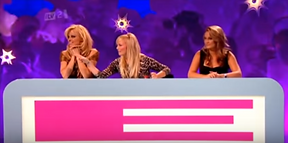
Theres one camera on each of the four presenters, these cameras also move to follow the presenters head. These cameras are there so the audience know who's talking and can naturally focus on them. At first there's just a shot of one of the presenters speaking, before it cuts to a view showing all of the shots at the same time. These are cut to most often while only one presenter is talking or to show the reactions of one other presenter while the others talk, but the other cameras are more often used for the latter
Theres a fifth camera above giving a wide shot of all of the presenters sitting down, this camera also moves closer to the presenters. It's only used once when one of the presenters is bringing up the topic question. This camera lets the audience see more of the set and the presenters on the show, giving a wider coverage of action while also maintaining viewer interest by letting them see more of the set than they'd be able to see in other shots. It shows the shows main colour scheme, blue and pink with a little bit of accented purple. The set is very simplistic while also being colourful, which contrasts the hosts and makes them easier to see
Theres a sixth camera inbetween the presenters in the middle (this can also focus on the right). This camera provides coverage of action by letting the audience see the speaker and also the other presenters reactions. Theres a seventh camera giving a wide shot of all the presenters, but unlike the fifth camera it's faced directly in the middle of them head on. This camera serves the same purpose as the sixth camera, but this time we can see everyone's reactions. Both of these camera shots are needed since seeing other peoples point of view is the entire point of the show, having these shots makes all the presenters opinions heard or at least seen
There are many cuts to different cameras in the show, this is to both have a coverage of action and communicate meaning to the viewer for the reasons above. Asides from the presenters in the show, there's no one else on set so there isn't any cameras dedicated to them
Loose Women. (2022) Frankie Recalls Terrifying Moment A Bully Tried To Fight Her | Loose Women. [Online Video.] Available at: https://www.youtube.com/watch?v=J4sEeWWlh0E. Accessed at: 14.02.22
NPR Music. (2019) Phony Ppl: NPR Music Tiny Desk Concert. [Online Video.] Available at: https://www.youtube.com/watch?v=5gP0-sDkFS8. Accessed by: 14.02.22


Questionnaire
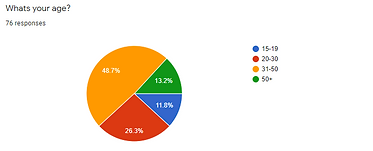


I had to distribute a questionnaire and get 75 responses. On the questionnaire I asked about things I was unsure of like the set design and what the rounds should be
The age range of this questionnaire in particular is significantly different than
any of my others done here and that's because of where I decided to
distribute the questionnaire. I used sites like Reddit and Facebook as the
target audience for game shows are normally towards older people. Most of
the responses are from 20-30 and 31-50 year olds, but there are also a large
number of 50+ people. The responses of ages are mostly even asides from
15-19
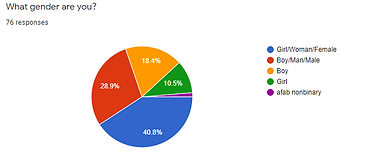
The responses here are a little strange as I got requested to put Woman as
an option here instead of Girl. There were 39 responses from women, 36
responses from men and one response from a nonbinary person. While there
are more responses from women, it's overall pretty even
I asked this question to see what people liked so much about game
shows and to find anything I could possibly put in my game show. Many
of the answers were one worded, like the comedy, suspense or being
able to play at home (two things I already planned to have in my game
show, the other is something that's done automatically). Since I also
asked this to introduce the questionnaire, the answers aren't that
important
I asked this question since trust is what the game show is all about and
in the first production meeting we didn't fully know what the colours or
rounds would really be. I got a lot of answers I wasn't expecting, many of
the answers were relating to love languages (gifts and spending time w/
someone else). Trust falls was also a very common answer, but since this
isn't a phsyical game show we can't do that. I was recommended to watch
a show called Money by Tom Scott by one of the responses, which I will
do later. Another theme that came up that I wasn't expecting was prison,
only two responses mentioned this. I'm not sure if we can go for that
theme, but it also links to a few of the responses I got for the next
question. I also got a few responses talking about blindfolds on this
question and the next one, but once again I'm not sure if it'd be safe for
us to do that
This is the question that I knew would help me the most. Because its a
very open ended question, I knew I'd get multiple different responses.
Most of the responses mentioned sabotaging, which was something also
suggested in the production meeting, but I feel if we decided to do that
then we'd have to have the whole show based around it. I'm also worried
that doing that would make the game end too short, as if the contestants
ended up figuring it out quickly there would no longer be a point of
continuing the show. Another popular option that I'm more likely to go
with is the "In The Dark" troupe where the contestants can make their
own choices without anyone knowing or the trivia round discussed in
one of the responses as I really like both ideas. While the bridge idea
is fun in its own right, I feel like with the sabotage idea the show would
have to be based on that premise. I also don't think it's physically
possible for us to do, especially as we're planning for this to be more of
a puzzle show. The secret idea could work and I may use that idea, the
team of the person would need a motive for to do that though. The
prisoners dilemma links back with the prison theme and is based on
a game theory that already exists, but it's already used for the final "split
or steal" round. Having to trust somebody else's answer for a question
or choose between two answers two people are saying is something
that's already in game shows, so it could work for ours. The phrase
idea and the "getting more points individually if the team guesses the
question wrong" idea could also work and I may implement it. One of
the responses also mentions the importance of having a round that
builds up trust, which I'll dedicate the first round to
I asked this question even though I was pretty confident in the name as I
wasn't very knowledgeable on game show names. Majority of the
answers said yes as its: catchy, memorable and the contestants can say it
in the show naturally. However I also got a few nos, even if only one
articulated their points in a way that I could do anything with. I personally
disagree with the name Splitsville as it sounds way too corny to me, but
I don't know as much about game shows. Another response also
suggested the name "Can You Trust Me?" instead which I agree sounds
much better while also having the quality of the original name, leaning
more into the game being based on shaky trust. I will most likely go with
that name moving forward
I asked how many rounds should happen as I was personally unsure.
However on this question I got a few responses that were confused as
they felt that they couldn't answer the question with how little they knew
about the show and what counted as a round. Unfortunately I didn't
either, this was why I asked that question earlier. In general though
most of the answers either said 4 or 5, very few of them also said 3 which
I think is definitely too low. 4 or 5 should do
The last question was also important as it was something our first prod.
meeting couldn't decide on. There were a lot of conflicting answers, some
said a light theme would be good because of trust while others said a
dark theme would work because the show is also based on distrust. I
personally like the third last and last options the most and think we'd be
able to pull it off. Another theme I like is a seasonal theme like Valentines
Day, I also think the prison-like theme is interesting as its come up so
many times in the responses, but I'm unsure if we'd be able to do it. One
of the responses mentions that this show probably wouldn't have a studio
audience, which I wasn't even thinking of but they're right
I think this questionnaire will really help me with my game show, many of
the answers were things I didn't even think about such as the prisoners
theme coming up so many times. I also appreciate the answers for the
rounds as I wasn't confident in the rounds we were planning to do in the
show and I really like some of the ideas, this is the same for the last
question. I was recommended a game show to watch so I can get more
ideas as well, so I'll be doing that too


Interview

I asked if anyone wanted to be interviewed to message me privately while distributing the questionnaires, but no one responded so I decided to ask one of my friends instead. I also had them do the questionnaire, so I wanted to try avoid just asking them the same things thats already on there. I asked this when I almost had all 75 responses for the questionnaire so I knew majority of the responses said that there'd be around 5 rounds, so I instead chose to ask how many contestants we should have
The first two answers are relatively simple and both align with many answers I got for the questionnaire already, which proved that I was right to hesitate on that. For the last answer, having 4 on each team would make sense but would equally mean we'd have to find 8 contestants. Having that many would also make the rounds a bit diffcult, as we plan to have only two contestants left at the end. Looking back at this, I don't know if we should have two different teams or just one big team with all the contestants. If I choose to do that though then we wouldn't be able to do some of the answers suggested in the questionnaire for rounds, such as the secret idea
This didn't help me nearly as much as the questionnaire mostly because I only asked three questions (two already being on the questionnaire), but did make me reconsider the team idea and answer how many contestants we might need in the show
Daily Diary 22/02
Today I had to analyse both my questionnaire and my interview, also completing my multi camera analysis to a better standard
I'm starting to rethink my possible position in floor management but there's nothing I can really do about it now. I think my questionnaire went really well and I'm pleased with a lot of the responses I got, even if my interview was still a bit lackluster. Following the multi camera powerpoint again, I think my analysis of it is much better now since originally I wasn't sure what to write. I'm not sure if I'll enjoy this unit since I find myself liking theory a bit more than the actual practical, but that might change with time and I need to get better at practicals anyway
Production Meeting 2
wix doesn't allow videos over 10 minutes
- name change: ‘Do you Trust me?’ to ‘Can you Trust me?’
- 4 contestants in round 1- 3 contestant in round 2- 2 contestant in round 3 and then in round 4 they decide to split/steal
- prize to remain anonymous- putting trust in each other to potentially split a big pot of cash
- need to confirm scheduling time on ITV- Saturday 8pm V weekday at 5pm
- presenter needs to be comedic/upbeat
- set design needs to be decided- research into set design/colours associated with trust
- need to confirm games for round 1, 2 and 3
Research List
- schedule timing/viewing figures (weekday 5pm or 8pm)
- colour association w/ trust
- opening titles (length, what they include, use of colour, use of music)
- graphics for game show (what people already do, timers, contestant names, social media information etc.)
- segment graphics (length, what they include, use of colour, use of music)
- music: research how existing game shows use music/SFX (at start of the show, when a contestant wins, the sound of the buzzer etc.)
- set design: research existing game shows and look specifically at set design (the position of the podiums, the colour schemes, the font choice used in the logo)
- research into different games[?]
- how the contestants buzz in
- research into job role (camera operator)
Research

The first thing I decided to research was the schedule timing, since in production meeting 2 people had conflicted answers about when the show should air between weekday 5pm or 8pm. I personally think it should air on 5pm, but I wanted to check. The show is planned to air on ITV, so I looked at the schedule times to decide which would be better
Looking at the charts, weekdays on 5pm seems to be the allocated time for game shows while 7pm is dedicated to Coronation Street and Emmerdale. I decided to see if we could still have this timeslot anyway by seeing the two shows average views. To do this I went on BARB and first saw the list of the most viewed programmes just in case they were there and unfortunately they are
This entirely rules out any other programme having that time slot, since these two shows are so highly anticipated they wouldn't be changed. Instead of on a weekday, since that's when these two shows air, I decided to check if 7pm on a weekend could work. On Saturday, Ant and Dec's Saturday Night Takeaway fills in the slot instead
Ant and Dec's Saturday Night is also another game show, so if we took this slot it'd also fit with what audiences are expecting at that time as well. I decided to also look at the shows average viewer-base and found out that last year the show had an average of 7.3 million viewers, peaking at 8.1 million. This would make it extremely difficult to take that slot, since according to the article dedicated to it the show is the "second highest rating programme of the year" outside of news and sport. That combined with the name of the show forcing it to be on a Saturday, it would seem very difficult for us to feasibly take that spot
Finally I decided to look at a list of all the shows on ITV to confirm if weekdays on a 5pm would be the best time, as I suspected from the beginning. Looking at the list, The Chase is 20th and Tipping Point is 36th. While this still isn't low by any means, it's lower than all of the other shows that would take place at 7pm
While I had a feeling that weekdays on 5pm would be the best time, I'm glad I did research into it as I now know that it'd definitely be. In the next production meeting I'll make sure to bring this up as 5pm on weekdays seems like the best time for the show to air and that 7pm isn't a viable spot
Now that I definitely know when my show will air I wanted to look into the next conflicting answers that came up in our 2nd production meeting, the colour scheme of the game show. I personally got answers from my questionnaire but got answers that directly opposed each other (light and dark), other people also got green and gold. Deciding on a colour scheme is very important since without it we won't be able to make our graphics or possibly our set. I personally thought of blue and white in the first production meeting
I first looked at a blog about web design describing what emotions each colour can bring out. I found out that blue is associated with serenity and trust, making people feel safe and welcomed. This is why banks and social sites like Twitter or Facebook uses blue. Light blue is seen as more refreshing, bright blue can be energetic but still calm and darker blues seem to focus more on security. An article on The Guardian says the same, listing blue as stable and smart. A book on color psychology also agrees, listing trust as one of the colours positive connotations
As I'm also still here, I want to also find an accent colour that would be good with blue and still fit within the theme. My first thoughts were orange (as it's a complimentary colour to blue) or white (as it'd keep in with the light theme suggested by some of the questionnaire answers and I know it's associated with purity already). Orange is associated with playfulness, which is part of the show brought by the host, yellow also symbolises that and confidence. Confidence is part of the show as well, the contestants would need to be confident in themselves and other people to move on in the show. Orange is also known to make people hasty and do things on impulse, yellow also does something similar with being associated with both happiness and danger. Both definitions tie into the theme of the gameshow
I still wanted to look at white though so I decided to look at a different book titled The Little Book of Colour, it states that white symbolises purity and perfection. As a secondary colour it can make other colours stand out as well and direct attention to anything important if used as a background. However white can also give a feeling of coldness, many sites use ivory or cream colours instead as it softens the cold aspect
The overwhelming majority of people associate blue with trust so, since that's the main theme of the show, we should also use it. While I'm not fully set on what saturation of blue I should use, knowing the main colour will help me know what colours I should use for my graphics and possibly the set design. For choosing my secondary colour, I'll have to ask everyone else in the next production meeting because I'm not completely sure what colour to use for that yet
Now that I knew what colours to use for my game show, I wanted to know what graphics I should have as well. This would also be a good time to watch the game show I was recommended to watch by one of the questionnaire answers. I first wanted to do a panel game show that airs on TV though, so I decided to watch an episode of Would I Lie to You and note what graphics are used
Would I Lie to You is a game show that airs on BBC. There are two teams and the goal is to make the other team believe your teams lies. The opening title is 17 seconds and the first thing on screen is some phrases that could be in the show ("I once spent a night in jail for..." and "I once spent three hours locked inside a..."), with the presenters faces acting as reactions. This clues the audience in what the show is about and the absurdity of the phrases would leave the audience interested in the rest of the show. The theme of the opening are newspapers cut out and stuck together, the transitions between each one is them unravelling. This could symbolise the contestants having to suddenly make up lies and the teammates unravelling the lies for themselves. Every time a new phrase shows up there's a guitar riff and the song eventually builds up as the opening carries on. The colours of the show are washed out primary colours and white, the font choice is bold, stands out and is easy to read
The set is designed more futuristically, featuring white and blue as it's main colours. The podiums for everyone are curved and are heavily shiny, the bright blue is extremely energetic and almost distracting, and the floor reflects the podiums and has small lights around it. The background is white with bright blue connecting all the screens. The screens are purple, blue and green which are meant to symbolise the different teams (the three colours are also right next to each other in the colour wheel). The host is in the middle while the contestants are facing each other (while also still facing the audience), which is standard for panel game shows. The set of the show is very circular in general
The shows hashtag appears on the screen while the host introduces the show. Graphics aren't used for introductions, or throughout much of the show at all, instead the host announces the contestants while making a joke about them. The host then introduces the premise of the round and when one of the contestants starts saying a phrase, their blue light turns purple instead. The contestants read off of cue cards for phrases, the cue cards have the show's logo on them. There is no buzzer as the rounds naturally end and the host moves on the show
While I personally dislike the set of WILTY and think it has conflicting themes (newspapers are inherently seen as old and the faded colours really adds to that, but the set looks really futuristic?), I think it was still important to analyse anyway as a case on not what to do
I decided to move on from WILTY as it doesn't use many graphics other than the opening, so I've already analysed most of it. I wanted to still do another panel game show though, this time I chose The Chase since it's another team based show and because it has a similar cash builder round at the beginning like we do and I know it uses graphics, buzzers and SFX
The opening title sequence shows the contestants, has the host telling what the premise of the show is, and is around 18 seconds. There's also a short animation of the show's logo, it represents the set with how the text is laid out and the person in the middle represents the chaser in the show. The red background is synonymous with the chaser in the show, since when they win the set background turns red, and the white chrome text contrasts that. The music used is the show's main theme and the ending is played throughout the show as a sound effect, the music is thrilling and is meant to present a chase between two people
The set is also futuristic but fits with the logo. Blue represents the contestants, which is why the set is so heavily blue other than the chaser's seat. The contestants share a podium as they all work as a team and it's also purple to break up the constant blue. On the podium is how much money the contestants have, which is the main and therefore biggest part, and the contestants names just in case the audience forgets or comes in later. To the opposite side, the chaser is sat above them all to signify their position and power in the show; this is also represented in how they dress professionally in suits and ties, compared to the contestants who are dressed casually. The background behind them is red as that's their colour. Inbetween the both of them is a board that has seven steps, the columns are represented by each teams colour while teal means neutral. The set has yellow lights on the walls and the floor as well to add an extra colour that's closer to red. There's also a live audience in the show, they're also above the contestants and they watch from a distance
Similar to WILTY, the contestants introduce themselves. In the cash builder round, there's a 60 second counter that appears and next to it is how much money the contestant currently has. This makes it so that the contestant doesn't know how much they have until it's the end of the round but the audience does. The colours are a teal blue (which is known as the neutral colour of the show) since to actually get that money the contestant has to win the next round and the text is white and easy to read. The music of the round is suspenseful as the contestant has to answer all the questions correctly as fast as they can. When the contestant gets the answer correct there's a short typing sound effect for the money counter going up and when the round is over there's a loud siren sound to let the contestants know their time is up. There's a transition effect for the counter fading out and a short wind SFX (this sound effect is also used to introduce the main board and the questions later on). When the chase is revealed, the background turns red and the music builds up, using the end of the show's theme. Once the chase sits down the set is back to blue
There's a "ding" sound effect for when the money is introduced on the board, the lower money option is lower in pitch while the higher money has a higher pitch. While the contestants talk to each other about what option should be picked, there's a low hum used as music, and when the contestant picks an option there's another different ding sound effect. Once the round starts the main theme show is played again, this time the ending sounding more sinister. Afterwards a song that increases the tension but isn't distracting plays throughout the round. The graphics for the questions has the same theme as the counter did for the first round and has the answers and the letter they're assigned to, this allows the audience to play along at home which is a very integral part to trivia game shows like The Chase. There's another sound effect for the contestant and the contestant's and chaser's name's appearing on the screen, this is meant to symbolise who buzzed in first to answer the question. There are sound effects for when both teams gets the answer right or wrong, the chaser's sounds are lower pitched
The Chase uses many sound effects, music and graphics with a unifying theme that links them all together. This is something I really want with my game show as I think it'd make the show more memorable. Everything feels unified and it has the bare essentials but doesn't look boring. In my game show I plan to use graphics with a single theme and I'll use music and sound effects in my game show to ramp up the tension like the show does
The last game show I wanted to look at was Money by Tom Scott as I got suggested to in my questionnaire. I was recommended this show because of it's themes of trust, like how my show has. Unlike the last two game shows this one is hosted on YouTube and there's only one full "season" of it. While analysing the game show I'll also go into more detail about the games and how they work as well, since we have the same theme of trust I can possibly use some of these games for my game show. Each episode is about 20 minutes long, as there are five episodes for five rounds this totals to 1 hour
The host tells the basic premise of the show while violin/string music plays in the background. Afterwards the opening title plays, since this isn't a TV show or hasn't gone on for as long the opening isn't as detailed or polished as The Chase. The opening title of this show is very simple and only lasts about 8 seconds. The title is meant to represent paper money, this is highlighted by the colour choice
The set of the show is also simple, being filmed in a small room. The set is still designed though, there are many cabinets in the background and it looks as if it's filmed in a wide attic, which could be the case. In general the set feels very warm with the brown, black and orange colours. The contestants and the host sit around a table close together with all of them being dressed professionally, some going a bit more business casual than others. Each contestant has a screen that covers their side of the table that'll be used later on
The premise of the show is that there are five rounds, each contestant has the chance to walk away with money. Its still not a team game and there's no "one winner" with whoever has the most money at the end. There's a briefcase that has the cash prize of $5000, but it's not guaranteed that you'll walk away with that amount. Whoever has the most medals at the end of four rounds has control of the briefcase. Contestants can give the others money but they can't give medals, instead there's only one opportunity to trade medals in before the fifth game. This opens the strategy to tell other contestants that you'll give them money if they do something, but then not give anything at the end. The host won't intervene if any of that happens and there's another rule for no outside deals like splitting the money at the end of the show
There are also opening graphics for the start of each game. The background is wood, which fits with the set, and there's text saying game one in white text. The green background behind the text makes it easy to read and fits with the money theme, the green is a different colour from the opening title but that may be because the text would be hard to read if it was a pastel green. The title of the game then appears in a different and bigger font, the black background draws the audiences attention to it. This only lasts for around 4 seconds, so making the title of the round bigger and easier to read is important
The music comes back in as the first game starts, it's mostly quiet to not distract the contestants or the audience from the rules of the game. In the first game the contestants have to write down a number between 0-20 and put it in a closed box, the number represents how many tickets the contestants want in the draw. The dealers will then take the box and then bring it back, the winner having a $100 prize back in their box. However the $100 is divided by the number all the contestants put in the box. Only the winner will know all the numbers put in (unless they choose to share it) but whoever put each number is kept anonymous. There are 3 rounds of this: the first prize is $100, the second is $300, the third is $500 and the winner of this round specifically gets a medal. This incentivizes the contestants to put a higher number to let everyone else win less, but it'll also come back to bite them if they're the one who ends up getting the money, or to put in a lower number to win more if they do get the prize. The audience does get to see who did what though, as there's a graphic at the bottom with everyone's names and the number they put in. The names are colour coded to match the contestants screen colour and are positioned on where they're sitting at the table so the audience gets reminded on who each of their names are
Afterwards there's an around 3 second graphic of the title of the show, this one is notably different from the other ones. The background is instead dark grey and the title is one of the colours used in the opening title. The minimalism lets the audience quickly read what's on screen. This graphic acts as a way to quickly transition to the contestants getting their box back
Game 2 is "Lowest Unique Bid". Each contestant have 5 paddles in their box, each one having a number between 1-5. The contestants put their chosen number in front of them and the other four will be closed inside the box. One at a time the contestants show their paddle, the person who has the lowest number that wasn't chosen by anyone else is the winner. The prize is multiplied by whatever number the winner chose. The important part about this round is that the answers are public and contestants are able to see who chose what answer
Game 3 is "The Magic Money Machine". Each contestant gets $100 at the start, they can choose to either keep that or to put some/all of it back into their box. The dealers then add however much is in the box and 20%, 50% in the second round and %100 in the third round ($ + %). The money will be split equally and returned to the contestants afterward. Whoever has the most in front of them at the end wins two medals, which is awarded publicly in front of everyone
Game 4 is "Pick a Prize", the last game before the final round with the briefcase. There are five prizes ($250, $100, $50, $0 and a medal, the money prizes get bigger each round), there are also five cards in the contestants box. They have to keep one card in front of them and leave the others in their closed box, the card shows what the contestants want. Everyone reveals their cards afterwards, if anyone else chose the same thing then they get nothing. The contestants don't know what everyone else will pick before the prizes are given out though, so once again people are anonymous
Before the last game people are allowed to trade medals, the person with the most medals get to control the briefcase. The host and the contestant with the most then leaves and goes to a different set. A violin adds suspense, going faster as they both walk out. The set is similar to the last one, being very plain, but moves onto Game 5
The contestant in here has won the $6000 in the briefcase already, but there are also the four boxes for the other players. The winner's goal is making the other contestants agree to a deal, to make it more likely the winner can add any amount of the $6000 into the others box. For the deal to go through at least three of them have to vote yes. They keep everything in their boxes and the winner gets to keep whatever's left in the briefcase. If the deal isn't accepted then all the money goes back in the briefcase and the winner has to try again, having 2 more chances (3 in total). If the deal still isn't accepted after that then no one wins anything in the briefcase. Since the winner and the other contestants are in different rooms though, they can't actually communicate and the contestants can't see the amount each others being offered. Another option is that the winner can leave
In general it seems that most game shows don't use many graphics other than the necessities (not using them for introducing contestants). Game show sets lean to have a more futuristic theme, blue being a very popular colour to use already. The theme of Money is the same as ours, but their premise is almost opposite. Our contestants work as a team to build the money and potentially split or steal by the end of it, while in Money they're pit against each other from the beginning and can optionally get teammates with mind games. I think that aspect of the show is extremely interesting and I want to find a way to incorporate moments like that in my show, but it might be difficult to do because the contestants are already in teams
Despite the individuality of the game, many of these rounds are focused on giving people a way to work together and earn equally. This makes adapting most games to fit our show easier. Game 1, 3 and 4 wouldn't really work in a team as there would be no reason for the contestants to not want to add more money for the team. Game 5 can't be done as my final round will be split or steal
I think Game 2 would be a really good addition to our show, but there might be a problem that the contestants don't have an incentive to lie. A way to work around this is to have the team's money count also tracked individually and have the incentive be that the contestants would be able to get the money they earned individually at the end (for example the team could've earned £1000: one contestant contributed £500, two others contributed £250 individually). We would also have to make the answers anonymous, since a part of our show is that the least trustworthy gets voted out. Doing this would also strengthen the option for the contestants to be able to lie about someone being untrustworthy to get them voted out
I was originally thinking that the contestants would use their phones to buzz in, but I wanted to do research on this to see if there were other better options
I first looked at how Jeopardy does it as it's also a game show. The buzzers are actually turned off right until the host finishes asking their question, the contestants are aware of when this happens as there's a signalling light on set (this is hidden away in the tv show though). The stage technician either resets the system if the answer given by the contestant is correct or re-arms it if they're wrong
The main goal of this was to learn how I can make my buzzer though. I came across a q&a website that had others asking the same question. Some of the answers were to use squeaky toys, to text the host instead, the bells from service counters, a pack of noisemakers, to only have one buzzer and whoever's the hand on the bottom would win or just asking people to raise their hands the fastest
Some of the answers given on the site were plausible, like using noisemakers or asking them to raise their hand. Others were probably not as good: texting the host would look odd on camera and wouldn't be as engaging to watch and using one buzzer or having the contestants slam their hands down on it would likely hurt someone. Another problem for some would be differentiating each sound, using a bell for example would sound the exact same and it might be difficult to tell who buzzed in first. I think the best thing to do would either use different noisemakers as suggested or to have the contestants raise their hand
If I do end up adding buzzers though I may also add something like Jeopardy's buzzer, where the buzzer is only on when the contestants are allowed to answer. Although doing this means that I'd also have to somehow find a way to signal that to the contestants on set
And finally I wanted to do research on the role I'd have for the game show
I will be a camera operator and it'll be my job to record the whole show. Because of this being recorded live I'll be on set, so I have to be quiet. There are multiple camera operators as we use multiple cameras but I mostly focus on myself throughout the show. The director and floor manager will direct me if there's a problem with the camera (examples being shots out of focus or me focusing on the wrong thing) through a headset I'll have to wear throughout the live show. Another thing I'm partly responsible for is the camera cables being closeby and making the set safer by not having camera cables lying around. Camera operators also tend to assist with blocking the set, figuring the best place for cameras to be placed at for good shots and for monitoring extra shooting accessories like tracking dollies. Some of the skills I'll learn from this job are concentration as I'll have to film a 20 minute long show and my listening and adaptability skills since I'll have to work with the director to quickly adjust my camera properly. This job will also help strengthen my technical skills with cameras
Knowing and understanding all of this is important since this is my job role in the actual production
BARB. (2022) Most viewed programmes | BARB. Available at: https://www.barb.co.uk/viewing-data/most-viewed-programmes/. Accessed by: 23.02.22
BBC. (2022) BBC One - Would I Lie to You?. Available at: https://www.bbc.co.uk/programmes/b007r3n8. Accessed at: 23.02.22
Cao, J. (2021) 12 colours and the emotions they evoke. Available at: https://www.creativebloq.com/web-design/12-colours-and-emotions-they-evoke-61515112. Accessed at: 23.02.22
Cristoffer Iversen. (2019) Would I Lie to You Series 12 Episode 3 S12E03. [Online Video.] Available at: https://www.youtube.com/watch?v=yosSA701q2U. Accessed at: 23.02.22
Haller, K. (2019) The Little Book of Colour. [Ebook] Penguin Books Limited. Accessed at: 23.02.22
IMDB. (2022) Ant & Dec's Saturday Night Takeaway. Available at: https://www.imdb.com/title/tt0324692/. Accessed at: 23.02.22
IMDB. (2022) Would I Lie to You? (TV Series 2007-). Available at: https://www.imdb.com/title/tt1055238/. Accessed at: 23.02.22
ITV. (2021) Saturday Night Takeaway peaks with 8.1 million viewers. Available at: https://www.itv.com/presscentre/press-releases/saturday-night-takeaway-peaks-81-million-viewers. Accessed at: 23.02.22
ITV. (2022) Today - TV Guide - ITV Hub. Available at: https://www.itv.com/hub/tv-guide. Accessed at: 23.02.22
Jeopardy. (2017) How Does the Jeopardy! Buzzer Work? | J!Buzz. Available at: https://www.jeopardy.com/jbuzz/behind-scenes/how-does-jeopardy-buzzer-work. Accessed at: 28.02.22
lilbear321. (2021) The Chase [August 30th, 2021] - video Dailymotion. [Online Video.] Available at: https://www.dailymotion.com/video/x83wwk6. Accessed at: 24.02.22
Metaville. (2008) Fun, easy and cheap ways for contestants to "buzz in" to answer quiz questions?. Available at: https://ask.metafilter.com/96016/Fun-easy-and-cheap-ways-for-contestants-to-buzz-in-to-answer-quiz-questions. Accessed at: 28.02.22
Redding, K. (2021) What Is a Camera Operator? Job Description, Salary, Responsibilities + More. Available at: https://www.backstage.com/magazine/article/camera-operator-70451/. Accessed at: 28.02.22
ScreenSkills. (Year unknown) Camera operator in the unscripted TV industry - ScreenSkills. Available at: https://www.screenskills.com/job-profiles/browse/unscripted-tv/technical/camera-operator/. Accessed at: 28.02.22
Shraman, N. (2020) Color Psychology in Treating Colour Blindness (Brain Mapping System). [Ebook] Memory Book: Smaran Shakti. Accessed at: 23.02.22
Thinkbox. (2022) Top programmes report | Thinkbox. Available at: https://www.thinkbox.tv/research/barb-data/top-programmes-report/?tag=ITV. Accessed at: 23.02.22
Tom Scott. (2021) Five YouTubers. Five games. $10,000. ⋮ Money: the full series. [Online Video.] Available at: https://www.youtube.com/watch?v=FJSI7QTAt_o. Accessed at: 24.02.22
Watson, G. (2015) Blue for trust, red for passion: how to pick a colour scheme for your brand. Available at: https://www.theguardian.com/small-business-network/2015/aug/24/how-pick-colour-scheme-for-brand. Accessed at: 23.02.22


Daily Diary 23/02
Today I had to do a production meeting, make a research list and start doing research into topics that'll help me for my game show. The homework is to complete the opening titles section
So far I think the game show is going okay, we still need to figure out a few things like the set design and the rounds themselves but I think with all the research we're doing that we'll be able to flesh it out better. Something I'm worried about though is that I imagine the colour scheme of the show and the set design to match, and with the bright colours I chose like blue and yellow/orange/white I'm worried it'll end up contrasting each other. I'll have to find a balance between all those saturated colours. Another thing I'm concerned about is the set design in general, we didn't really decide what our set design should be. I find graphic design really fun to read about and research, so researching colours was very interesting to me. In general I also find researching my absolute favourite part of theory, there's something very satisfying about watching the research grow as I continue. I'm aware of how long my research is (and how long it takes to do because of that) but I know it's because I genuinely try my best to add as much detail as I can
Daily Diary 24/02
Today I had to continue with my research list and have a third production meeting.
I will have to source game show music and SFX later on when I have a better theme. I also think making the contestants people who don't know each other would be better, since a problem I noticed while watching Money was that in Game 5 the option for the winner to leave couldn't have feasibly been chosen since the winner personally knew all the contestants and would feel immensely guilty/probably have to see them tomorrow. I talked about this in the 3rd production meeting. I realised that the idea I had for a round in the show conflicted with what the actual trust theme was, the theme is that the trust is built up until the end. Even still though I think it was definitely worth my time to watch
Production Meeting 3
wix doesn't allow videos over 10 minutes
- games:
1 quiz (general/random trivia : 60s quickfire)
2 higher/lower (expensive something is : 8 rounds)
3 physical (the cube, dont know how much money they have afterwards, audience participation to vote out the 3rd member)
4 split or steal
- set:
screen hidden, viewable for contestents
projector for higher/lower
podium (decorated table)
blue (different shades) and white
logo/title
- costume:
business casual for host
Bibliography
BARB. (2022) Most viewed programmes | BARB. Available at: https://www.barb.co.uk/viewing-data/most-viewed-programmes/. Accessed by: 23.02.22
BBC. (2022) BBC One - Would I Lie to You?. Available at: https://www.bbc.co.uk/programmes/b007r3n8. Accessed at: 23.02.22
BBC News. (2018) Talking Business: Canadian Prime Minister Justin Trudeau - BBC News. [Online Video.] Available at: https://www.youtube.com/watch?v=l45El1e76k0. Accessed at: 10.02.22
BFBS Sports Show. (2022) ❄️ Taylor Lawrence on Winter Olympics, Royal Marines and more! | PUSH. [Online Video.] Available at: https://www.youtube.com/watch?v=EtCAokz_zrw. Accessed at: 10.02.22
Blue Peter. (2022) Dan Rhodes FOOLS Adam Beales 🃏| Blue Peter. [Online Video.] Available at: https://www.youtube.com/watch?v=heXPFVYclgQ. Accessed at: 10.02.22
Cao, J. (2021) 12 colours and the emotions they evoke. Available at: https://www.creativebloq.com/web-design/12-colours-and-emotions-they-evoke-61515112. Accessed at: 23.02.22
Catchphrase Game Show. (2016) Catchphrase Game Show December 05,2016 - Catchphrase Show. [Online Video.] Available at: https://www.youtube.com/watch?v=br-6sH4xsxQ. Accessed at: 10.02.22
chambersm741. (2012) Winter Wipeout - Series 1 Episode 1. [Online Video.] Available at: https://www.youtube.com/watch?v=VjoHC__Sifk. Accessed at: 09.02.22
Cristoffer Iversen. (2019) Would I Lie to You Series 12 Episode 3 S12E03. [Online Video.] Available at: https://www.youtube.com/watch?v=yosSA701q2U. Accessed at: 23.02.22
Haller, K. (2019) The Little Book of Colour. [Ebook] Penguin Books Limited. Accessed at: 23.02.22
IMDB. (2022) Ant & Dec's Saturday Night Takeaway. Available at: https://www.imdb.com/title/tt0324692/. Accessed at: 23.02.22
IMDB. (2022) Would I Lie to You? (TV Series 2007-). Available at: https://www.imdb.com/title/tt1055238/. Accessed at: 23.02.22
IMDb. (Year unknown) Match Game 73 (TV Series 1973-1990). Available at: https://www.imdb.com/title/tt0069608. Accessed at: 09.02.22
IMDb. (Year unknown) Wipeout (TV Series 2008-2014) - IMDb. Available at: https://www.imdb.com/title/tt1156535/. Accessed at: 09.02.22
ITV. (2021) Saturday Night Takeaway peaks with 8.1 million viewers. Available at: https://www.itv.com/presscentre/press-releases/saturday-night-takeaway-peaks-81-million-viewers. Accessed at: 23.02.22
ITV. (2022) Today - TV Guide - ITV Hub. Available at: https://www.itv.com/hub/tv-guide. Accessed at: 23.02.22
Jeopardy!. (2022) Final Jeopardy!: Toys & Games | JEOPARDY!. [Online Video.] Available at: https://www.youtube.com/watch?v=AisSk-x9xTo. Accessed at: 09.02.22
Jeopardy. (2017) How Does the Jeopardy! Buzzer Work? | J!Buzz. Available at: https://www.jeopardy.com/jbuzz/behind-scenes/how-does-jeopardy-buzzer-work. Accessed at: 28.02.22
lilbear321. (2021) The Chase [August 30th, 2021] - video Dailymotion. [Online Video.] Available at: https://www.dailymotion.com/video/x83wwk6. Accessed at: 24.02.22
Loose Women. (2022) Frankie Recalls Terrifying Moment A Bully Tried To Fight Her | Loose Women. [Online Video.] Available at: https://www.youtube.com/watch?v=J4sEeWWlh0E. Accessed at: 14.02.22
Manville, S. (Year unknown) Creating & Pitching Game Shows for Today's TV. Available at: https://www.tvwritersvault.com/creating/creatinggameshows.asp#.YgJPILenxky. Accessed at: 08.02.22
MatchGameProductions. (2012) Match Game 73 (Episode 60) (Comedy Gold) (Full Credits). [Online Video.] Available at: https://www.youtube.com/watch?v=uWMXSuoD4GE. Accessed at: 09.02.22
Metaville. (2008) Fun, easy and cheap ways for contestants to "buzz in" to answer quiz questions?. Available at: https://ask.metafilter.com/96016/Fun-easy-and-cheap-ways-for-contestants-to-buzz-in-to-answer-quiz-questions. Accessed at: 28.02.22
Mo-Sys. (2020) What Is a Jib Camera? | Mo-Sys Academy. Available at: https://www.mo-sys.com/what-is-a-jib-camera/. Accessed at: 10.02.22
Ninja Warrior UK. (2019) 2019 TOP 10 MOST WATCHED Runs | Ninja Warrior UK | Ninja Warrior UK. [Online Video.] Available at: https://www.youtube.com/watch?v=mmtOuLEMA2I. Accessed at: 09.02.22
NPR Music. (2019) Phony Ppl: NPR Music Tiny Desk Concert. [Online Video.] Available at: https://www.youtube.com/watch?v=5gP0-sDkFS8. Accessed by: 14.02.22
pcrobec. (2018) Celebrity Juice S06E03 Girl on Girl special. [Online Video.] Available at: https://www.youtube.com/watch?v=dt1HYOhLrzg. Accessed at: 10.02.22
Redding, K. (2021) What Is a Camera Operator? Job Description, Salary, Responsibilities + More. Available at: https://www.backstage.com/magazine/article/camera-operator-70451/. Accessed at: 28.02.22
Ryan Hamill. (2012) Whose line is it anyway UK - 8.1. [Online Video.] Available at: https://www.youtube.com/watch?v=ZIIJ7PNpXCc. Accessed at: 09.02.22
ScreenSkills. (Year unknown) Camera operator in the unscripted TV industry - ScreenSkills. Available at: https://www.screenskills.com/job-profiles/browse/unscripted-tv/technical/camera-operator/. Accessed at: 28.02.22
Shraman, N. (2020) Color Psychology in Treating Colour Blindness (Brain Mapping System). [Ebook] Memory Book: Smaran Shakti. Accessed at: 23.02.22
The Good Place. (2017) The Good Place - Season 1 Bloopers (Digital Exclusive). [Online Video.] Available at: https://www.youtube.com/watch?v=886A2ErYpQk. Accessed at: 10.02.22
The View. (2021) Rachael Ray Opens Up About Loss and Cookbook "This Must Be the Place" | The View. [Online Video.] Available at: https://www.youtube.com/watch?v=fKBg2Qn2S0E. Accessed at: 10.02.22
Thinkbox. (2022) Top programmes report | Thinkbox. Available at: https://www.thinkbox.tv/research/barb-data/top-programmes-report/?tag=ITV. Accessed at: 23.02.22
Tom Scott. (2021) Five YouTubers. Five games. $10,000. ⋮ Money: the full series. [Online Video.] Available at: https://www.youtube.com/watch?v=FJSI7QTAt_o. Accessed at: 24.02.22
Watson, G. (2015) Blue for trust, red for passion: how to pick a colour scheme for your brand. Available at: https://www.theguardian.com/small-business-network/2015/aug/24/how-pick-colour-scheme-for-brand. Accessed at: 23.02.22
What's My Line?. (2017) IT'S NEWS TO ME with John Charles Daly (Aug 3, 1952). [Online Video.] Available at: https://www.youtube.com/watch?v=0Xto8vwVR9Q. Accessed at: 09.02.22
Wheel Of Fortune. (2014) Top Five Most Amazing Solves! | Wheel of Fortune. [Online Video.] Available at: https://www.youtube.com/watch?v=rtYR03DOahI. Accessed at: 09.02.22
YouGov. (2021) Wipeout popularity & fame | YouGov. Available at: https://today.yougov.com/topics/media/explore/tv_show/Wipeout. Accessed at: 09.02.22