
Radio Forms
I'm doing secondary research into radio forms to further my knowledge in the subject and because it'll further help me in creating my own radio production
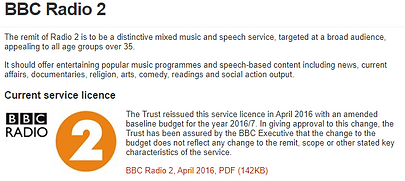
The first radio form I looked into were BBC commercial radios. BBC has over 50 radio stations, all broadcasted throughout the UK. They also have national stations such as BBC Radio 1, 2, 3, 4, 5 live and 6 Music. These stations have the Royal Charter. which means they are grant issued by the Queen. As these stations have a licensing fee, they don't have advertisements for anything other than their own programmes. All of it's radios can be found on the BBC Sounds page. Each of these radio stations focus on different subjects and cater to different target audiences, such as BBC Radio 2 focusing on showing a wide range of music genres and BBC Radio 5 live talking about sports. BBC Radio 2's audience have a steady ratio of women and men listening (with women slightly overtaking) and the average age was 57, its intended target audience being women aged 35-44. BBC Radio 5 live's average listeners were men aged 53, with its target audience being 25-44 year old's. These were both found and recorded on separate surveys during 2017. Both of these stations follow their remits. BBC Radio 2 is to present mixed music and speech while appealing to all age groups above 35. Its also stated to talk about news, social actions, religion, art, documentaries and readings. BBC Radio 5 live's remit is to cover live news and sports, bringing in audience news stories and analysis. The audience stated on the remit aims to appeal to all sports fans no matter the age or ethnicity. As seen on the BBC Radio 2 page they discuss topics such as the 2021 Young Writers' Award, economics and finding love online. BBC Radio 5 live's page shows podcasts related to sports (such as Football Daily and The Euro Leagues Podcast) and discussing the future of sports
The next station I researched were commercial radio. These radios have advertising and are funded by them, they're also usually independent. These ads can be longer than ones on TV and can also host sponsorships. Two radio stations that function this way are Kiss FM and Heart. Kiss FM's audience is 15-34 year olds and is said to have a 60/40 split between women and men. The company focuses on playing popular music and engaging with their audience on social medias like Facebook and Twitter, this is to properly cater to their target audience. It also has a KISS Kube App to play music on. Heart's target audience are 25-44 year olds and the radio plays songs from the 2000s alongside some recent music. The company connects with its audience by "playing the right songs" to help them throughout the day and with their presenters. Heart's remit specifies that the station is to be music-led and have news, information and entertainment. The audience is 25-44 year olds, but that the specific target is people in their 30s. Kiss FM's remit had expanded from 'dance' to include other genres such as urban genres such as R&B and hip hop to dance-pop
As I plan to do a commercial radio, this research showed me that I should add advertisements to my radio. I may consider also being a music-led radio
After that I researched were regional stations. Regional stations are stations that play in a region, it can be delivered by any radio broadcasters from the BBC to independent ones. Many radio stations are regional as to have a wider audience, Times Radio and talkSPORT both being regional. Times Radio is a recent presenter-led and has debates and analyses about the latest news and stories. talkSPORT is a sports radio station mainly covering football but also talks about cricket, rugby and boxing. The target audience for talkSPORT is predominantly male (80% of listeners are) that are aged 18-40. Times Radio's audience is between 18-34 year olds but its target audience is said to be 30-40 year olds. talkSPORT's remit is similar to BBC Radio 5 live, providing sports coverage and news
I then quickly looked at digital radio stations. Digital radio stations are as stated, its a radio that can be listened to digitally. These can be listened to with DAB (Digital Audio Broadcasting) digital radios and allows people to listen to digital-only radio stations such as BBC Radio 6 Music or ABC News & Talk
The next thing I researched were hospital radios. Hospital radios are used to help patients recover and to elevate their mood. As their primary audience are patients, their target audience is very general and they try to appeal to everyone. Luton & Dunstable Hospital Radio plays music and even takes requests through calls, text or email. The station also has presenters talking about current news. Hospital Radio Bedford is another hospital radio that mainly plays music but also hosts talk shows. They also take music requests from others and are heavily run on volunteers and donations. L&D's hospital radio can be listened to anywhere digitally while Hospital Radio Bedford can only be played in the hospital
Afterwards I did research on student radios. Student radio is a radio that's run by students normally of a college or university. They can either be run exclusively by students or include other programmers from where the station is based. As these radios are run by students the target audience is also students, usually below 18, this is similar to community radios in a way. Two student radios are Rare FM and Radio Lab. Rare FM does live broadcasts and hosts club events with a diverse range of music genres. Radio Lab talks about the latest news, gaming, racing news, youth network and broadcasts music, also taking requests an promoting upcoing artists
When making my radio production I will follow what most student radios do by disussing topics my audience will be interested in, looking at these student radios has given me ideas on what to talk about such as gaming news and the latest news for example. In student radios its also common to have a focus on music, which I may also impliment in my radio
And for the last subject of research I looked into Community radios. This form of radios are non-profit and are made to cater to a specific geographic community. As such they broadcast content that is relevant to only them. Community radios are often owned and operated by the community that they're catering towards. These communities can include a specific ethnic, age or interest group. However these radios are often overlooked due to bigger broadcasters and radios being more popular. Two examples of community radios are Angel Radio Isle of Wight and The Eye FM. Angel Radio focuses on broadcasting music from 1900-1960s and documentaries about the time period. They also feature local charities and community groups. The radios main target audience are older people and people who enjoy nostalgia or this time period. The Eye FM also focuses on a similar concept, broadcasting music from the past 6 decades and upcoming musicians in their area. The community they serve are Melton, North-East Leicestershire and South Nottinghamshire
Angel Radio. (Year unknown) About Us. Available at: https://www.angelradioisleofwight.com/AboutUs. Accessed at: 05.01.22
Bauer Media. (Year unknown) Kiss - Brands - Bauer Media. Available at: https://www.bauermedia.co.uk/brands/kiss. Accessed at: 05.01.22
Bauer Media. (Year unknown) KISS Media Pack. Available at: https://www.bauermedia.co.uk/uploads/kiss.pdf. [Ebook] Accessed at: 05.01.22
BBC. (2022) BBC - About Radio 2. Available at: https://www.bbc.co.uk/programmes/articles/3MhDvs4L5c7Tw7FXkSmXYBY/about-radio-2. Accessed at: 05.01.22
BBC. (2022) BBC Radio 2 - Jeremy Vine. Available at: https://www.bbc.co.uk/programmes/b006wr3p. Accessed at: 05.01.22
BBC. (2016) BBC - BBC Radio 2 - BBC Trust. Available at: https://www.bbc.co.uk/bbctrust/our_work/services/radio/service_licences/bbc_radio_2.html. Accessed at: 05.01.22
BBC. (2016) BBC - BBC Radio 5 live - BBC Trust. Available at: https://www.bbc.co.uk/bbctrust/our_work/services/radio/service_licences/bbc_r5_live.html. Accessed at: 05.01.22
BBC. (2022) BBC Radio 5 live - 5 Live Sport. Available at: https://www.bbc.co.uk/programmes/b0070hx6. Accessed at: 05.01.22
BBC. (2017) BBC Radio 5Live. Available at: http://downloads.bbc.co.uk/radio/commissioning/Radio5Live-606.pdf. [Ebook] Accessed at: 05.01.22
BBC. (2017) BBC Radio 2. Available at: http://downloads.bbc.co.uk/radio/commissioning/BBC_Radio_2_Sounds_of_the_80s.pdf. [Ebook] Accessed at: 05.01.22
BBC. (2022) BBC Sounds - Music. Radio. Podcasts. Available at: https://www.bbc.co.uk/sounds. Accessed at: 05.01.22
BBC. (Year unknown) What is DAB radio?. Available at: https://www.bbc.co.uk/reception/help-guides/dab/what-is-dab-radio. Accessed at: 05.01.22
Capital. (2019) The UK's Number 1 Hit Music Station - Capital. Available at: https://www.capitalfm.com/no1/. Accessed at: 05.01.22
Duggins, A. (2020) Has Times Radio fulfilled its promise of a commercial Radio 4?. Available at: https://www.campaignlive.co.uk/article/times-radio-fulfilled-its-promise-commercial-radio-4/1723129. Accessed at: 05.01.22
Gorkana. (Year unknown) Sport and talkSPORT. Available at: https://www.gorkana.com/events/media-briefings/gorkana-media-briefing-with-wireless/. Accessed at: 05.01.22
Heart. (Year unknown) About Us - Heart. Available at: https://www.heart.co.uk/about-us/. Accessed at: 05.01.22
HRB. (Year unknown) Hospital Radio Bedford. Available at: www.hospitalradiobedford.org.uk. Accessed at: 05.01.22
HRB. (Year unknown) Hospital Radio Bedford | Tuning In and Most Requested. Available at: www.hospitalradiobedford.org.uk/most-requested/. Accessed at: 05.01.22
KISS. (2022) KISS | The Beat Of The UK. Available at: https://planetradio.co.uk/kiss/. Accessed at: 05.01.22
L&D Radio. (Year unknown) Luton & Dunstable Hospital Radio - About Us. Available at: https://www.ldhr.co.uk/about. Accessed at: 05.01.22
L&D Radio. (Year unknown) L&D Radio. Available at: https://www.ldhr.co.uk. Accessed at: 05.01.22
media.info. (Year unknown) Times Radio. Available at: https://media.info/radio/stations/times-radio. Accessed at: 05.01.22
Media Performance. (2022) Advertise on talkSPORT. Available at: https://www.mediaperformance.co.uk/advertise-on-talksport-radio. Accessed at: 05.01.22
Ofcom. (2010) KISS 100, KISS 101 and KISS 105. Available at: https://www.ofcom.org.uk/__data/assets/pdf_file/0017/33047/main.pdf. [Ebook] Accessed at: 05.01.22
Radiocentre. (Year Unknown) Commercial radio at a glance - Radiocentre. Available at: https://www.radiocentre.org/why-use-radio/commercial-radio-at-a-glance/. Accessed at: 05.01.22
Radio LaB. (2022) Radio LaB 97.1FM. Available at: https://radiolab.beds.ac.uk. Accessed at: 05.01.22
Rare FM. (2022) Rare FM. Available at: https://rarefm.co.uk. Accessed at: 05.01.22
talkSPORT. (2018) About. Available at: https://talksport.com/about/. Accessed at: 05.01.22
talkSPORT. (2015) talkSPORT audience grows 8%. Available at: https://talksport.com/uncategorized/275099/talksport-audience-grows-8-150521147586/. Accessed at: 05.01.22




RAJAR
RAJAR (Radio Joint Audience Research) is a company that collects data from and measures UK radio audiences, serving the BBC and other commercial stations. Both the BBC and the Radiocentre own the company to better regulate the commercial sector. It seeks to provide the research specification and give quality research to third party suppliers. RAJAR isn't for profit and is instead funded by the BBC and other stations that join the service. They also do infographs to properly present their research in an understandable and concise manner
Now that I know about RAJAR, I plan to use the statistics on that website to better help me understand what audiences want from radio shows. This is extremely important so I know what audiences like when it comes to making my radio show
RAJAR. (2021) All Radio Listening. Available at: https://www.rajar.co.uk/docs/news/RAJAR_DataRelease_InfographicQ32021.pdf. Accessed at: 05.01.22
RAJAR. (Year unknown) RAJAR. Available at: https://www.rajar.co.uk/content.php?page=about_organisation. [Ebook] Accessed at: 05.01.22


Ofcom
This section is overall included to protect minors from harm, stress or just from general content that they aren't meant to see. This is done as children's minds are impressionable and some things such as occults or drugs shouldn't be shown to them as it'll have irreversable damage on their minds. When talking about children, section one states that it means people under 15 years old. The section stresses media for children to not show but especially not condone or glamorise: drugs, smoking, alcohol, violence, offensive language, sexual content or (real) occults/paranormal. If this has to be done then a warning should be given out to the audience before discussing any of these topics. There is a term called "the watershed" that is generally between 5:30-21:00. While this term is only used for television it can also extend to radios having to be cautious of the times where children will be listening, such as breakfast or school run. Because of this all media has to schedule their programmes accordingly, which is why media with these acts are put at around midnight. When considering appropriate scheduling there are multiple factors to consider such as the nature of the content, the start and end time of the content and the audiences that might be viewing the content at that time. Under-eighteens are also protected by section one if they ever work on set, having higher priority to protect under any circumstances. It's important to not put unjest stress on them. If a prize is ever advertised to children then the prize must be suitable for them and any other participants
As my radio will be a student radio, under-eighteens are the target audience. I will adhire to section one and keep appropriate scheduling in mind while planning it out. As I'm doing so I won't talk about any of the topics listed above or use strong language in my radio, but if I must then I will give out a warning before doing so. Because this is a student radio, under-eighteens will naturally be involved. I will follow Ofcom guidelines and protect them if they're ever involved on the radio show
Ofcom. (2021) Section one: Protecting the under-eighteens. Available at: https://www.ofcom.org.uk/tv-radio-and-on-demand/broadcast-codes/broadcast-code/section-one-protecting-under-eighteens. Accessed at: 05.01.22
Ofcom. (2020) The Ofcom Broadcasting Code (with the Cross-promotion Code and the On Demand Programme Service Rules). Available at: https://www.ofcom.org.uk/tv-radio-and-on-demand/broadcast-codes/broadcast-code. Accessed at: 05.01.22
Daily Diary 05/01
Today I was introduced to the new brief and had to do research on different radio forms and radio stations. For homework I have to do research on RAJAR and Ofcom discussing what I learned
I really don't like radio production already. I knew I wouldn't though, the sector really doesn't interest me and I don't like talking. The only research I was remotely interested in was for community radios as I liked seeing their niches. However this unit will help me improve my communicational skills and give me knowledge on how radio stations work. I have demonstrated my research skills here and while I'm not interested at all in what I'm doing, I still have the determination to push through and do research that is up to a great standard
Station idents
A station ident is a tune or "jingle" that's played to identify the radio station, as there's no visuals it has to be done this way. This is why it's referred to as "idents" as a shorthand for identity. Station idents are pre-recorded and edited already, making them easily playable with just the click of a button. Idents can be used to introduce a section in the radio or to remind the audience of what radio they're on. As idents are normally used on the same sections (such as talking about the weather, traffic news or introducing the live part of the radio for example) this makes it memorable and lets the audience know what part is coming up next if they're interested. Idents are a very easy way to make your radio station memorable. Governmental licensing authorities may require radios to regularly identify themselves because there are many people using the radio, it can also be for the audience to send complaints easier
For example Kiss has many station idents. It has many different idents to remind
the audience of what station they're listening to ("this is KISS" or just the brand) or
for celebrities such as The Chainsmokers. Kiss uses popular songs for idents too
as they're mainly music-led. The songs are often loud and upbeat to catch the
audiences attention, with there being edited voice over accompanying them
(they're also usually timed with the music). The editing on the voices range from
sounding robotic to making the voice sound more excited. All of this is done to
appeal to their target audience, which are mainly teenagers and people who use
social media. As this audience has shorter attention spans the idents are short,
heavily edited with sound effects and feature songs that the audience is likely to know to catch their attention. Audiences that fit into the mainstreamer category would like how Kiss uses popular and familiar music as part of their indents, also liking how they sometimes use celebrities for idents introducing themselves as well. Mainstreamers are often comprised of teenagers as well, which is the prime target audience for Kiss
BBC Radio 2's target audience are older people around 35-44 years old.
These idents are upbeat and sound like a section of a song. The voice over in its
idents says "88.1 FM" as that's the FM the radio uses. The radio stations name and
other sections such as "Joe & Simon" are sung instead of spoken. These are done
as BBC Radio 2 is a music-focused radio station and can serve as a way to link
their theme with their brand. Its also more memorable for them to be sung as
normal radio idents simply say their idents. The genre and sound of the music
(upbeat sounding, energetic guitar) used in these idents also appeal to the target
audience who may want to sing along with these. Their breakfast idents are loud
and bombastic to wake the audience up, these idents are also longer than normal
ones to achieve the same effect. The voice overs in these are loud and have a
choirlike feel to them, edited to make the voice go on for longer. As BBC Radio 2
is all about promoting musicians and showing different/new genres of music, the
audience is mostly made up of explorers. Explorers would like the high energy in
the idents and the voice overs singing as its unusual but exciting
BBC Radio 1 also features music, but it focuses on more popular music than BBC
Radio 2 does. The target audience for BBC Radio 1 are 15-29 year olds. This is
shown in their official chart opener, starting with electronic music that builds up
until after the voice over. The voice over has a slight echo to it feel like its on a
stage. This ident overall is almost one minute. This genre of music appeals to
both teenagers and young adults as well as the overall theme of BBC Radio 1 as
the indent is inspired by popular music (mostly filled with electronic music). Its
also worth noting that as this is a show opener it might get talked over and used
as background noise. The target audience for BBC Radio 1 are young and could
fit into many demographics of the psychographic table, such as the explorer or
aspirer. Aspirers and mainstreamers would like how the radio focuses on popular trends, including how the music sounds inspired by those trends. Explorers would be interested in the sudden guitar in the chart opener as well
Listening to these idents will help me make my own as I'll know what professionals do. I might use popular music or try to use echo effects in my idents, but I want to try and have a theme with my idents first before I think too heavily on what I'll include in them
Academic. (Year unknown) Station identification. Available at: https://en-academic.com/dic.nsf/enwiki/355292. Accessed at: 06.01.22
BBC. (Year unknown) BBC - About Radio 1. Available at: https://www.bbc.co.uk/programmes/articles/1qDmdH8V94XKTPB51Q6ZFPN/about-radio-1. Accessed at: 06.01.22
BBC. (2016) BBC - BBC Radio 1 - BBC Trust. Available at: https://www.bbc.co.uk/bbctrust/our_work/services/radio/service_licences/bbc_radio_1.html. Accessed at: 06.01.22
Media Music Productions. (Year unknown) Radio Station Idents - Fully Produced - Tailored to your station. Available at: https://www.mediamusicproductionsuk.com/radio-station-idents/. Accessed at: 06.01.22
radiojingles. (2019) 2019 Breakfast Openers, Idents & Jingles for BBC Radio 2 from Wisebuddah. [Online Video.] Available at: https://www.youtube.com/watch?v=LqQGvA4Radk. Accessed at: 06.01.22
radiojingles. (2017) KISS FM UK The Radio Imaging 2017. [Online Video.] Available at: https://www.youtube.com/watch?v=zYDe7LttDEA. Accessed at: 06.01.22
radiojingles. (2018) New Jingles for BBC Radio 2 Hot AC from Wisebuddah. [Online Video.] Available at: https://www.youtube.com/watch?v=J8b82gPFBBA. Accessed at: 06.01.22
radiojingles. (2018) Official BBC Radio 1 The Official Chart Show Opener. Available at: https://www.youtube.com/watch?v=F1PJeZXkbFE. Accessed at: 06.01.22
Market research
BBC Radio 2's target audience are 35-44 year olds (Millennials), having an almost even (as women are slightly above) amount of women and male listening. Its listeners often fit into ABC1 and are explorers as BBC Radio 2 promotes new genres of music. I listened to The Sara Cox Show, When Have You Turned Up At The Wrong Time Or On The Wrong Day?
BBC Radio 2 caters to them in many different ways. There's an ident to introduce Sara and her segment, its upbeat and starts with claps to get the audiences attention. The voice over says "ladies and gentlemen" as to appeal to the older audience and is slightly edited in some lines to give the delivery a sense of power. When the voice announces the presenters name and BBC Radio 2 they actually sing it instead, which fits in line with the theme of BBC Radio 2 being music-led. The ident then fades but a different track plays over Sara's speech, the song getting increasingly upbeat and bombastic as it goes on, acting as a bed. This is to make the announcer feel more lively and provides entertainment while the audience listens to Sara talk. Sara, as the only presenter, sounds exactly like the music does with her slightly slurred speech and excited tone. She also talks in a loud and fun way to ease the mood using words such as "your wonderous teatime extravaganza" and "like an elasticated waste band of time". She sometimes talks in between the music (to the beat) like she does for her introduction and makes many jokes while talking, even while signposting. This is a tone she keeps throughout the radio show. The music and presenter combine to create a happy mood to cheer people up while they're driving to or from work, which most people in the target audience would most likely be doing at this time
The music stops and then there are sound effects of traffic (car horn noises) and clapping, after that the first song of the day starts to play. The sound effects are meant to reference that the radio is currently playing during drive time and the clapping is meant to symbolise the audience listening. The song fades in to create a seamless transition between the two and then fades out when it ends
When the song ends the presenter talks again about a different subject, first introducing the audience with a joke about hugging them too tightly. This joke would appeal to older audiences who'd find it funny. She then asks how the audience has been and that she's missed them. Addressing the audience this way makes them feel as if they have a personal connection with the host, which is good as they may keep tuning in to listen to her. This is also why its important to have a likeable and nice presenter in radio, as they may act as a sole reason for audiences to keep listening to the radio. This part doesn't have music so the audience can only focus on Sara's words, this gives them time to grow attached to the presenter. She talks about how she accidentally turned up to work at the wrong time (a subject that'll be very relatable to the audience) and asks if they have ever had a time where they did the same. She then says the name of the radio and BBC Radio 2's number to text or call, with a song starting to fade in. This is an easy way to get audience participation as she asked a question for the audience to answer (and older people are much more likely to have an answer to the question) and subtly acts as a way to give the presenter more subjects to talk about. The song is a ramp as the beginning of it plays while Sara is speaking. Another song later on acts as a reverse, being a song that fades in the background as Sara starts to speak again, and also has a back announce as the presenter says the title of the song "Let's Hear It For The Boy"
In between two songs there's an audio clip saying the brand and who's section is currently on, "This is Sara Cox on BBC Radio 2". Its clear that this is an audio clip as its clearly edited, having a slight echo on the voice at the end. This is done to remind the audience of what radio they're watching and is especially needed as otherwise there would be two songs playing back to back with some people not knowing what the radio is
When the presenter pauses while speaking, the music used as a bed will pick up and get louder. This is to avoid awkward silences and also shows how beds are used. The subjects talked about in the radio are mainly questions like what the title is (when have you turned up at the wrong time or on the wrong day) or what the audiene is haing for dinner and the audiences answers to the question. She reads out the answers in a dramatic voice and plays up her reaction to the answers to keep up the fun mood. The music (bed) in the background picks up as she continues reading, adding to the drama, and at one point drops when Sara laughs. The actual song then starts playing once Sara stops talking
The BBC sounds website is plugged in when Sara talks about a work-out mix that'll be playing soon, another example of signposting. Before it happens though Sara gives a story about when she had candy wrappers "flutter to the ground" when she undressed in a humorous tone, which might be something the target audience can relate to and laugh about. Afterwards there's an advert for BBC iplayer and its programme Superman. As everyone listening to BBC Radio 2 would have to have BBC iplayer, this ad acts as a way to remind the audience of that
There's an ident for BBC Radio 2 afterwards as its been roughly 10 minutes since the last one, presented in a style the exact same as the first one was. Then a newsreader reads out any current traffic in a clear manner, this is so audiences can properly hear what's going on. The presenter then introduces the next song that will be played and who the artist is
Skipping to the last few minutes of the show, Sara mentions how the audience requested a song and then talks with an audience who called in. This part is obviously ad-libbed from the presenter as its an audience member calling in. The presenter asks how the audiences member's day has been, what they just ate and asked about them in general. While the actual conversation does not matter much, this may inspire other audience members to call in and have a friendly talk with the presenter as well. They eventually stop talking and the last song that plays acts as the final part of the radio. Theres no clear sign off or reminders of anything, this might be because there's another show right after it
I don't find this show funny or care for the presenter but I do recognise that, as a 16 year old, I'm really not the target audience for this. This show is heavily reliant on audience participation and call-ins (posing questions to the audience to respond to and answer) which I find almost endearing. Its clearly a strategy to get audiences to feel closer to the presenter and the radio station so they keep listening. I think its effective and, if I can, may plan to also do in my radio show
BBC Radio 5 live's target audience are 25-44 year olds with an overwhelming majority being male listeners. Listeners fall under ABC1 and resigned categories as most audiences are older people. I listened to the 08/01/22 Sports Report
The station immediately begins with the announcers talking about the game with no idents. This is a stark contrast from BBC Radio 2 that has one and the presenter greeting the audience. BBC Radio 5 live does this as the audience is only here to know about how the game is going and any introductions would feel unnecessary and a waste of time. To highlight this, the presenter only talks about the game and doesn't address the audience at all. Its important to note that this show may not just be on radio but also be on TV. The only background noise are people cheering and the audio is clearly going through a speaker as well, so the stadium would be able to hear everything the presenters are saying too. And older audiences, especially male audiences, have a "no nonsense" attitude and usually want to get to the point. This is why it'd be awkawrd for them to address the radio listeners as it would break the pace of the match and most people aren't interested in other fans watching but rather the game. Its called "Sports Report" for a reason, audiences might be annoyed if the show started off with anything else
There are two presenters and they only narrate the current game and sometimes the audiences reaction in the stadium, this is so radio listeners know exactly whats going on despite not being able to see any of it. They're clear in their wording and rarely make jokes like BBC Radio 2's presenter does as its unneeded. Any other comments made are only one word like "wow!" and "amazing!". This radio station in general feels more fastpaced than BBC Radio 2 for many different reasons. The presenters of BBC Radio 5 live are narrating the game quickly to match the excitement the audience would also get from watching the football game. The two shows also have different set times, Sara Cox had an hour but Sports Report only has half of that. This is because Sara Cox plays music in her show and needs more time for that, but the 30 minutes also forces the presenters of Sports Report to be faster in their delivery so they can go through everything thats needed
Its worth noting that Sara Cox and Sports Report just fundemently work differently and have different house styles. Sara Cox asks a question to the audience, plays a song, responds to audiences answers and asks a new question, then plays another song afterwards. There are also times where she has to promote another BBC related programme or give out news on traffic, but the status quo ultimately doesn't change. Sports Report just doesn't have that, its purely two presenters narrating a football match and then another presenter talking about different football matches. This is done for reasons already said, audiences purely want to know about the football game. BBC Radio 2 encourages audience participation and want to capture the feeling of being your friend, but BBC Radio 5 live only wants to talk about the game. This is also shown in their permit: "...bringing its audience major news stories as they happen. It should provide context to its news and sports coverage through wide-ranging analysis and discussion." and "Programming should be designed to inform, entertain and involve". While they do still have to be entertaining, they don't have to be nearly as friendly as BBC Radio 2 does (its permit states that "It should offer enteraining popular music programmes")
When the football match is over a new presenter speaks. This presenter is clearly not in the stadium as the other two are as their microphone quality is better. Once again there is no ident for this. The audio from the stadium (the audience cheering) quietly fades out as the new presenter continues talking, presenting the news bulletin. The news bulletin lists the new football stories and upcoming matches. Afterwards the main (new) presenter switches over to another presenter who's in a stadium watching a different game, a game that was mentioned in the news bulletin. It does this again with a different match, once again feeling very fast-paced. There are multiple male presenters but only two women, this may be because the overwhelming majority of audiences are also male
The "intro" finally begins as the main presenter, who's name is Mark Chapman, says good morning, what his name is and the radio station is for the first time after 7 minutes into the show. Admittedly BBC Radio 2 started with a weather report but that only lasted 5 seconds and the ident for the show immediately played afterwards. As stated already the two shows pacing is completely different, BBC Radio 5 live audiences most likely want to get into the action of the game before anything else which is why the intro doesn't start until the match at the beginning ended. After the intro a song plays, most likely the ident for this show, for a few seconds and then acts as a bed as Mark talks about football teams that've recently won matches. There's a short audio clip that plays after each match mentioned to show the other reporters reactions for that previous game. This may also be done as older audiences might be skeptical of the radio station lying about results
The music then fades out and a new presenter speaks, listing the upcoming and current matches. She talks in a clear and consise manner so the audience can clearly hear what's coming up. This goes on for quite awhile. Afterwards Mark says to cut to a match currently happening, where another reporter currently at the match talks about the game. They also do a short interview with a person who's in one of the football teams and they give a positive opinion on both fans communicating. In general the rest of the show consists of presenters interviewing others (but not the listening audience) on their opinions on reent football games and teams. BBC Radio 5 live doing this fits into their permit that states that the radio station "should provide context to its news and sports coverage through wide-ranging analysis and discussion.", this fitting into discussion and analysis of the community around football. Both BBC Radio 2 and BBC Radio 5 live let others share their opinions, BBC Radio 2 does it to appeal to their audience and interact with them while BBC Radio 5 live does it to let the audience have insight from the people who are actually on the football team
On one of the games the reporter promotes BBC 1 by saying if the audience wants to watch the game they can by watching it there. BBC Radio 2 also promotes its TV programmes with BBC iplayer, as BBC has a licensing fee they don't need to do adverts like other radios do so they take the opportunity to advertise their own brand. By the time this is said the radio show is almost over and the audience might want to see the game for themselves, so this acts as a way to keep the audience engaged with BBC
There is no outro, instead the show ends with a football match ending and one of the reporters talking about the audiences reaction. It ends abruptly too with the reporter in mid-sentence, which might be an accident on BBC Sound's part. BBC Radio 2 didn't have a clear outro either and neither stations restated the station name, but BBC Radio 2's presenter at least acknowledged that it was the end of her show
I really don't like football either but once again I'm the exact opposite of the target audience. BBC Radio 2 and BBC Radio 5 live are extremely different in how they're structured and are interesting to compare as they're both from the same company. What I appreciate about BBC Radio 5 live is that they're very direct and get to the point of their show, which is reporting the current news on football. Both shows have vastly different tones because of this as well. When making my radio show I'll try to do a mix of both BBC Radio 2 and BBC Radio 5 live, making jokes here and there but not too much that it distracts me from the point of the radio show. I'll also try not to end so abruptly like BBC Radio 5 live does and remember how much time I have left when it gets to the end of my show
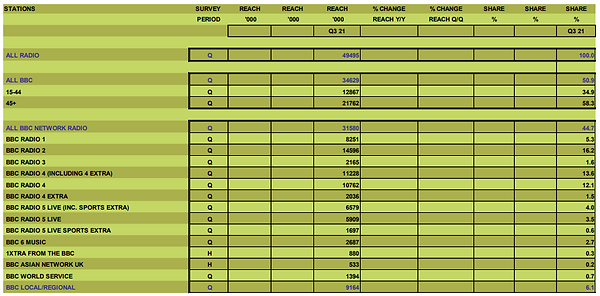
Overall BBC Radio 2 is on average listened to significantly more than BBC Radio 5 live. This is because BBC Radio 2 plays music that anyone can listen to and caters on having a chill and friendly attitude, while BBC Radio 5 live is focused on sports and only sports. While sports isn't a small niche it is still a niche and if someone isn't interested in sports they'd have no reason to tune in, but with BBC Radio 2 there's at least music to listen to or traffic updates. BBC Radio 2's total hours is also much higher than BBC Radio 5 live for the same reasoning and because BBC Radio 2 goes on for more hours than the other
BBC. (2022) Sara Cox - When Have You Turned Up At The Wrong Time Or On The Wrong Day?. Available at: https://www.bbc.co.uk/sounds/play/m00132lq. Accessed at: 06.01.22
BBC. (2022) Sports Report - 08/01/2022 - BBC Sounds. Available at: https://www.bbc.co.uk/sounds/play/m00138q6. Accessed at: 09.01.22
RAJAR. (2021) RAJAR. Available at: https://www.rajar.co.uk/listening/quarterly_listening.php. Accessed at: 09.01.22

Daily Diary 06/01
Today I learned about new terminologies such as back announcing and crunch and roll. For homework I have to finish my market research on two different radio stations and then compare them
I've already said how I feel about this unit in my first diary entry and I heavily doubt my opinion will change; I don't like this unit but I appreciate how it'll help me with my researching skills and my presenting skills later on. I don't find the market research task difficult, if anything just tedious and time consuming as I have to listen to two different radio stations, and I think I'm doing well on it so far. While there is a minimum word count of 1500, I'm really not worried about it as I already have about 900 words just on the first radio station and I'm still not done on that one yet. Although this is a good thing, I am concerned if I added too much and am going into this with too much detail
Radio Remit
Peer Assesment
Mind Maps

draft

final
Radio Remit Planning
Production Meeting 1
Research List
Content:
-
Analyse existing radio shows who have utilised a similar competition to yours
-
Radio competition prizes
-
Music chart research to support competition content and music playlist (to include Emerging UK artists)
-
News: Local events (Bedfordshire) and college events (Ofsted)
-
Spotify Wrapped research [part of questionnaire]
-
Topic research [TBC, outcome of questionnaire]
-
Relationship advice for teenagers
Presenting
-
Radio presenting styles/techniques
-
How to conduct/record a successful radio phone in
Audience:
-
RAJAR statistics to identify the most successful drive time shows
-
Analyse the most successful drive time shows in terms of codes and conventions
Production research:
-
Ident production- Adobe Audition
Second method of primary research: Interview w/ Open Mic Jam Session
Research
After creating my research list I decided to start on audience as radio shows ultimately cater to them. Looking at RAJAR statistics, the most popular BBC radio station is BBC Radio 2 with the most popular commercial radio being Heart (UK). Looking at both of its remits, this may be because both of these radio stations strive to appeal to a large audience and are known for also playing music during their shows
I decided to look further into these shows to see if my assumptions were correct. Heart UK's target audience is 25-44 year olds but they also appeal to younger audiences with their use of social media. Its worth noting that, like BBC does in a way, Heart UK has a few different stations under its brand. It has Heart Network, Heart 70s, Heart 80s, Heart 90s and Heart Dance. While Heart Network is definitely the most popular overall, these other smaller stations helps to boost its audiences numbers. Heart also hosts many competitions and the prizes are often money or a holiday trip (they can also be electronics, luxury items, ect.) these are both on its website and broadcasted on its radio stations. The competitions are often also linked to the radio station with the audience having to listen to its station to win the prize, most likely one of the biggest reasons it has so many daily listeners
As I have already extensively researched into BBC Radio 2, I didn't feel the need to have to anymore than I already have. Its clear that BBC Radio 2 attracts a wide range of audiences (its target audience have no gender preference and are millennials, but some of its listeners can also fall into the explorer category) despite aiming for a specific target audience. The target audience BBC Radio 2 aims for are also more likely to be listening at breakfast and drive time as they may be driving to work. It also massively helps that there's no gender preference, as it means they can cater to older adults in general which gives them a wider audience. Both of these stations also succeed because they feature audience participation and strongly rely on it: Heart hosts many competitions to win prizes, BBC Radio 2 sometimes have their presenters have a conversation with an audience member and both consistently plug in social media so they can interact with their audience and keep them engaged in their content
At first I was skeptical if this would help me but after doing the research I realised it was. Knowing why these radio stations are so popular is essential for me to understand what audiences like from radio shows. As I already intend to have competitions like Heart does in my radio station and possibly having call-ins from audiences, I know that if I do that they'll be received well and would fit into the codes and conventions of a radio station. I may also consider having a catchy slogan like Heart does ("Turn up the feel good") but I'm unsure if I'll include that yet
As mentioned in my research commentary, I already planned to have a competition in my radio show. This competition will be us playing a few seconds of a song and having the audience guess what song that was for a prize. While I'm unsure if we'll have call-ins for that or encourage the audience to answer on social media (most likely the former), I want to do research for the competition anyway. To help with this I'll look at what other radio shows with these competitions do and look into what the prizes should be
One radio station that does this that I've already talked about is Heart. Heart is widely known for its competitions and prizes, the current one the radio station is doing is called "January Jackpot 2022". In this competition people listen to the radio station for the "January Jackpot song". When this song plays, the audience has to text the name of the artist with the word "WIN" to a number to claim their prize. This winner is then randomly selected on air and the presenters tell them how much they've won, hence the jackpot in the name. The biggest prize is £22k. The presenter and winner also get to have a short conversation about what they'd do with the money if it was a huge amount
Another radio station that does this is Absolute Radio. During Christmas it hosted a competition for the audience to earn "huge cash prizes" by texting WIN to a number or entering online on its website. Afterwards the presenter would call the audience member and they would have to say "Make Me A Winner" and the winning phrase to receive the daily prize. The winning phrase would be revealed on the radio show
The first obvious connection would be that both of these prizes are money. This is a common prize in radio stations and is most likely the most popular prize people would want. Winning electronics may be useful but winning money meant that the audience would be able to choose what to do with the money. It also saves the radio show having to source items to give away to people. These two competitions are also similar in another way though, they both force the audience to listen to the radio station if they want the prize and require the audience to text to the radio's number (which means interacting with the radio station in some way). These competitions must boost listeners, if even for a short period of time, which can be impactful to the radio's popularity. Its also worth noting that Heart often hosts competitions this way, Heart UK being the most popular commercial radio station
Before I did research into this, I was already pretty set on having the prize being money. I wasn't fully sure whether to have the prize be something else though, but now I know I'm definitely doing money as its the most popular prize. For how I'll host the competition I'll definitely have to host it on the radio show, but instead of what I said earlier I've decided linking it to texting a phrase to a number or an "official" website would be best instead of call-ins. How the competition is hosted (listening out for a song) was already similar to what official radio stations do so I don't feel a need to change it
Afterwards I decided to do research for the news bulletin as I'm going to have to be the one presenting it. I first looked at an event bulletin for Luton. After looking through a few of them I decided to go with talking about the University of Bedfordshire Campus Tour and a RIMAP Postgraduate Research Student Conference. I chose these events as these are both related to college in some way and this is a student radio, when talking about college events I will talk about clubs such as sports instead to not bore the reader too much
The University of Bedfordshire Campus Tour is exactly as it sounds, its a campus tour around the Luton university. The Luton campus has a Campus Centre, STEM building, Campus Library and a Postgraduate & CPD Centre. The university is known for being a school of Art and Design. The Campus Library not only has a cafe and a gallery space, but also hosts DJ nights and student events. The university has a digital studio with 3D printers and many studios, one being one for photographing in. The Postgraduate & CPD Centre has postgraduate courses and features lecture theatres and quiet study areas. On the tour people can only bring one other guest with them per COVID rules and to take a place in the tour people will have to have a Campus Tour ticket
The RIMAP Postgraduate Research Student Conference is an invitation by the Research Institute to watch the conference. There are presentations such as "Interactive Art Vs Pandemic" by Emma Bowman, "How Absurd is Absurdity?" by Derek Willmer and "The Ki-energy way of body and Self" by Laura Brera. The conference has both in person and online presentations and showcases the students art and projects. People are also encouraged to talk with their researchers. To enter the person has to register on Eventbrite, this is to help with catering numbers
Next I had to look into the current events happening in college. I decided to look into the Open Mic session that happened earlier and talk about the Enrichment activities. I chose the Open Mic event as I could interview the person running it, thus conducting my second primary research. The Open Mic event was hosted at lunch and featured students from Music playing songs live with their instruments, some also sang songs. The event was hosted in the sports hall and was recorded
For enrichment activities I decided I would first list off all the activities currently available. I chose to talk about these clubs as I know that a new club was added recently. The newest club is indoor cricket (Tuesday, 5pm-6pm, sports hall). There are 6 clubs in total, football (Monday, 12:15am, sports hall), cricket, debates (Wednesday, 3pm, microsoft teams), badminton (Thursday, 12:15am, sports hall), BSL (Thursday, 12:15am, room 91 & microsoft teams) and SEN Variety Sport (Friday, 12am, sports hall). As there isn't much information given about them on the website I can't give much more detail about them
Now that I knew what topics I would be presenting, I wanted to do research into better helping my presenting skills. I decided to look at different tips to help me with this
The first website I looked at gave 7 tips. The first tip was to know and connect with the audience, to aim to be relatable to them. As I fit into the target audience, I imagine it won't be too difficult to be able to do that. The 2nd tip is to "make the listeners care" which means when I'm presenting I have to be interesting and entertaining, I can't sound bored like I'm reading off of a script. The tip also encourages to make presenting a story in a way. The 3rd tip is to address the audience individually and avoid terms like "Hey all" and "Some of you" as listening to radio is usually a solitary experience. It also implies that words like "You" make the audience feel more engaged and possibly more personal. The next tip is to sound confident and energetic but not to sound forceful. The presenter has to guide the audience so its good to not ramble and instead be clear with wording. The 5th tip is to sometimes break the rules as you see fit, to not stick too much to the formula otherwise it'd get boring. Knowing how things are done and when its acceptable to do things differently will interest the audience and make the radio stand out more. The 6th tip says to properly adjust the mic so its comfortable to your face and to know how to talk to it. It says that you have to have a bit of distance away from it but that its still not good to make a lot of noise with your mouth as it will pick up everything. Other mentions are to not "pop your p's" or make the music beds too loud, saying that beds are best used in short bursts. And the final tip is to be yourself
The other website I looked at was The Pips, it doesn't have tips in a list like the previous one. The three main questions it asks are "What is the point? Why am I doing it? Who cares?". This is to be aware of the target audience before presenting. An important rule for presenters is to always be relatable and engaging to the audience. The next tip is to keep the links (lines a presenter will say) short and simple as listeners won't focus otherwise. It then gives some questions to help plan out these links: "How are you going to start the link? How are you going to get into your content? How are you going to end your link?". The last question is the most important, to end a link seamlessly, and without it can make the entire link fall apart. It says to not talk over songs as it annoys listeners to not let the song end naturally. It also encourages to learn how to sell as thats the main role of a presenter, I'll have to read off of a script but I have to sound like I'm not. It says to either not read off a script for this or to only write down bullet notes. Another rule is to generally not say anything on the radio that you wouldn't in real life, "DJ-isms" are annoying to listeners and sound very cheesy. Ultimately one of the last tips is that practice makes perfect
With the first website I looked at, I didn't completely agree with the tip of addressing the audience individually. I understand why they say this but at times like the intro I think it's fine to sometimes speak to them that way. Even still I'll try to follow it for the most part, in a way I'm following the 5th tip that was given. I have a similar (but more minor) disagreement to one of the tips on the second website, sometimes I will have to use music as beds and talk over the music like with a back announcement. Although I do get that the tip means I shouldn't constantly talk over it which I won't do. A lot of the questions in that website also address things I already know such as who the audience of my radio show will be and why I'm doing the radio show in the first place. The second website mainly helps me with writing my radio script rather than radio presenting too which is still appreciated. Overall I'll follow the tips as doing this research has helped me learn some things such as how close I should be to the microphone and that beds are best used in short bursts
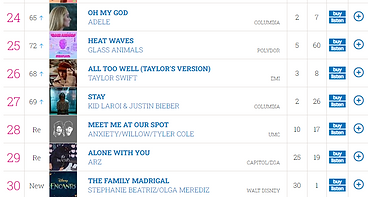
The next thing I decided to research was what songs to play on my radio. I already decided on playing some of the songs on the charts but I also knew I had to promote some new and upcoming UK artists. I started with looking at the Top 100 singles in the UK. The list was automatically on 07 January 2022 - 13 January 2022 and I decided that was recent enough for me to use this list. As I won't have many songs playing because there'll be much more talking, I only took note of the first 30 songs
I will have to listen to a few of these songs to properly
determine which one of these I'll use, whether that be because
they're inappropriate or I just really don't like the songs. I'm a
bit cautious of that as I will have to listen to these songs on my
radio as well, so I want to listen to something I'd not hate
Now that I have a selection of songs to pick, I have to look at emerging UK artists. This was also one of the questions in my questionnaire (to suggest an underground UK artist the audience liked). Looking at a few different sites for this, I found a few musicians. A few of the artists I found on these websites were: Kamal (bedroom pop), Tsunaina ("organic opera"), Scuti (UK grill & trap), KAM-BU (rap) and Alfie Templeman ("high-res pop")
After finding the music I wanted, I remembered I also wanted to do research on Adobe Audition so I can properly make my idents. I didn't know what exactly I wanted to learn from it as I didn't know much about the software, so I decided to watch some beginner guides for it
I first watched a guide by Mike Russell. He said that the sample rate should normally be at 44100hz or to go to 48000hz if recording a video, any lower and the quality of the audio will worsen. Stereo channels are for recording music/jingles and that Mono is good for voiceovers, but he also recommends Stereo over Mono in general for Multitrack sessions. The bit rate can be left default. The record button will record as long as the audio interface is set up properly and can be paused with the spacebar key. He recommends to hover on Adobe Audition, go on Preferences and click on Audio Hardware and also Audio Channel Mapping to check that it is. The hotkey for the play button is also spacebar. When recording he says that its usually preferable to be between -3 and -6 dB so the audio isn't too loud or quiet. Another way to do this is to click on the yellow line in audio, put a point on it and then drag it down. You can also turn up the audio in post with the Adjust Amplitude button on the left, its a click and drag on the symbol to change the audio. A quicker way to do this is to go on Favourites and click on Normalize to -0.1 dB, it'll make the audio the loudest the waveform can be. To zoom in and out I can scroll with the mouse wheel while hovering on the time track. To get rid of a part of the audio all I have to do is select that part and press the delete key. The Effects tab has many different uses: Amplitude & Compression is to make the audio sound clearer and smoother, EQ can increase the high end or low end of your voice, ect. Multitrack session is non destructive which means any edits made to that audio won't permanently change the audio file itself. To make the audio fade in and out I can click on the triangle on the corners of the audio and drag the yellow line to curve. To save it as a single audio file I can hover on Multitrack in the menu, go on Mixdown Session to New File and clicking on Entire Session, this automatically puts it on waveform view. When saving the format is usually a .wav file but I can also go for an mp3 audio. Usually markers and metadata should be kept on
That video covered all of the things I was planning to do with Adobe Audition, but I still wanted to see if there were guides for more advanced things such as removing background audio if needed. For more guides and tips I can also use Adobe's own tutorials or this website for guides on more advanced edits
The guide video by Mike Russell only covered most of the basics, but I knew I wasn't going to do much more than the things in the video already covered. By watching his video I learnt most of what I needed to. When making my idents I may use effects such as Echo to enhance a portion of my audio and for my voice overs over it I'll use Compression to make it sound smoother
The next thing I researched was for relationship advice for the advice column that'll be on my radio. The relationship advice doesn't just have to be romantic, it also includes platonic relationships. I decided it would be good to focus on both as they're both equally as important and because platonic relationships are often forgotten when giving advice for relationships
The first website I looked at was for parents who wanted to give dating advice to their children. The tips they gave were to be with someone they're comfortable with and don't feel pressured to do anything around, sexual-wise but also things like forcing them to go with them to places. The next tip is to not forget your friends as its important to still have a social life besides your partner. This helps with the next tip, to still be your own person and to be yourself. Being confident in yourself can also lead to you being more confident with the relationship you have with your partner. Its also important to be honest with each other and to not hide problems or concerns you have with the relationship. Talking about these issues with the other person will drastically improve the relationship in the long run and it'll be easier to do. The next tip is similar to this, its to know the difference between a "good and bad conflict". These are often seen as bad but can also improve the relationship and bring people closer even if they disagree with each other. The rules to stick to while having a disagreement is to: explain how you feel without demonising the other, listen to the other person and try to understand their reasoning without being critical and to not bring up past arguments. There are also signs of an abusive relationship listed: being constantly critical of you to make you feel bad, try to distance you from your family and friends, use social media to constantly monitor you, force you to do things you don't want to or to threaten you with anything if you both break up
I decided to look at a book that had advice for friendships as I wanted to cover more than just romantic advice. The first pages of the book are dedicated to the importance of friends and how important they are to people, especially teenagers. It can cause severe damage if someone grows up without any, even in adulthood. Teenagers need friend groups and support from others as they want validation and to feel safe. Belonging to part of a group can support them with their confidence and their social skills. With the help of social media you can connect with anyone no matter the distance, but it also means that its harder to develop deeper bonds with people. This can create problems with young people who rely heavily on the internet, especially teenagers. The book also goes into depth with parenting and how they can affect teenagers. Parents have the life experience to help them but relations between them can sometimes be "stormy" as young people want more freedom in life. This can lead to parents also becoming upset with them and can lead to them distancing themselves from their children or forcing them to follow their advice. The book then defines friendship as a fundamental component in life, being one one of the most important relationships that someone could ever have. It then cites multiple different pieces of media such as cinema and books (Toy Story, How I Met Your Mother, The Big Bang Theory, ect.) that reaffirm this idea. Afterwards it talks about how friendship has evolved overtime while also saying that friends for life and even sometimes good friends usually don't happen. It then says that longstanding friendship usually become like family instead. This is why its important to have these friendships and to not forget or abandon them in the hopes of a romantic relationship instead
Now that I had finished researching for the advice column, I wanted to do research on topics I could discuss. While I had this question on my questionnaire I did also want to do topic research for this just in case the responses aren't helpful
I've already listened to a drive time radio show already, it was BBC Radio 2. The show was mainly focused on asking questions to the audience and the presenter listening/responding to their answers and while it is effective, it's not what I want to focus on. I understand why that radio show is structured that way but unlike that show we have two presenters, which means we'll be able to talk to each other and have a natural conversation
I first looked at The Guardian's article on "What makes the perfect radio drivetime show?". As expected the article talks about what makes drivetime shows so great. It mentions having a conversational style and talking about a radio presenters various radio games. The article puts emphasis on that its a drive time show so reading traffic and weather news is important but more importantly those shows are set at the time where people would want to relax as they've either already finished work or are going there for a late night shift
The next article was more about general radio stations. It states that social media is an important platform and that with radio stations you can promote upcoming movements by shouting out hashtags or talking about social issues. It also says to do something different from every other radio show like The Pips website did, the example it gave is when every radio station played the World Cup song when another played a parody of usual football songs. This ended up working tremendously and was 8th place on the Amazon download chart at one point. It mentions that audiences in evenings want to be informed but also entertained. It also has tips on making an effective radio that says to: schedule a good playlist, report the most important news when you get it, make topics short but also relevant and to showcase the main topic of the day. It says to also make it entertaining in some way, to add a little flavour to any and all lines no matter how mundane. A way BB Radio did this was to make a prerecorded segment called BB RADIO Mitreden in 60 Sekunden (Join The Conversation In 60 Seconds), it explained questions such as "Why does Russia want influence in the Crimea?" to inform the audience. They did this as audience listeners attention spans are very short and will only continue to get shorter
While looking at The Guardian's article, one of the games the radio presenter did interest me. It was called Ask The Nation and it featured other people asking for advice on awkward social questions ("If you accidentally feed a vegetarian some meat do you tell them?"). I like the idea and I might add it as a topic we can do instead. Reading more about what drive times require also makes me consider adding at least a weather report in there so it feels more like a drive time show. The other article featured more tips I hadn't seen from my other sources like the 60 Seconds section and I may also do something like that for my show as I like the idea
The last thing I would research was how to record a radio call-in properly. I chose to do this last as at first I wasn't sure if I would add one in, but I've ultimately decided that I will and even if I was still unsure that I should research it anyway just in case. The Guardian article I looked into for this went more into the technical aspects. I would need a TBU (Telephone Balance Unit) to be able to put the caller live on air and it'd help me with other things such as fading their audio in and out or balancing the audio so presenters don't talk over them or vice versa. There are also multiple other ways to do it listed on the article itself
The Guardian's article is nice to know, but the technology will most likely be supplied by the college anyway
Absolute Radio. (Year unknown) Win huge cash prizes in time for Christmas every weekday on Make Me A Winner. Available at: https://planetradio.co.uk/absolute-radio/competitions/win/make-me-a-winner/. Accessed at: 12.01.22
Adobe. (Year unknown) Audition tutorials | Learn how to use Adobe Audition. Available at: https://helpx.adobe.com/uk/audition/tutorials.html. Accessed at: 13.01.22
Ashbrook, J. (2021) 7 Tips on How to Present Great Radio. Available at: https://radio.co/blog/7-tips-present-great-radio. Accessed at: 12.01.22
Barnfield. (2022) Live | GAP. Available at: https://www.gap.barnfield.ac.uk/enrichment-live. Accessed at: 12.01.22
Barron, Brenda. (2021) 10 Beginner Audio Editing Tutorials for Adobe Audition. Available at: https://speckyboy.com/beginner-audio-editing-tutorials-for-adobe-audition/. Accessed at: 13.01.22
Bhamji, M. (2021) Friends - A Guide to Friendship for Teenagers and Adults. [Ebook] Books for Life Publishing House. Accessed at: 13.01.22
Dee, J. (2012) What makes the perfect radio drivetime show?. Available at: https://www.theguardian.com/tv-and-radio/tvandradioblog/2012/apr/03/greg-james-bbc-radio-1-drivetime. Accessed at: 13.01.22
Dunn, F. (2021) 12 new musicians making the UK sound awesome. Available at: https://i-d.vice.com/en_uk/article/m7ep7q/new-uk-music-2021. Accessed at: 13.01.22
Ehmke, R. (Year unknown) Teens and Romantic Relationships. Available at: https://childmind.org/article/how-to-help-kids-have-good-romantic-relationships/. Accessed at: 13.01.22
Eventbrite. (2022) RIMAP Postgraduate Research Student Conference. Available at: https://www.eventbrite.co.uk/e/rimap-postgraduate-research-student-conference-tickets-227033381957. Accessed at: 12.01.22
Eventbrite. (2022) University of Bedfordshire Campus Tour - Luton Campus. Available at: https://www.eventbrite.co.uk/e/university-of-bedfordshire-campus-tour-luton-campus-tickets-223929016717. Accessed at: 12.01.22
Giger, T. (2014) Radio Programming & Promotions For Drivetime & Evening Shows. Available at: https://radioiloveit.com/radio-programming-radio-formats/radio-programming-and-radio-promotions-for-drivetime-shows-and-evening-shows/. Accessed at: 13.01.22
Global. (Year unknown) Heart | Radio Advertising | 10m Weekly UK Listeners | Global. Available at: https://global.com/radio/heart/. Accessed at: 12.01.22
Heart. (Year unknown) Heart UK Competitions - Win Money, Holidays & The Best Prizes!. Available at: https://www.heart.co.uk/digital/win/. Accessed at: 12.01.22
Heart reporter. (2022) January Jackpot 2022: Twenty people will win £22,000 this month!. Available at: https://www.heart.co.uk/win/january-jackpot-2022/. Accessed at: 12.01.22
media.info. (2021) BBC Radio 2 - listening figures. Available at: https://media.info/radio/stations/bbc-radio-2/listening-figures. Accessed at: 12.01.22
Mike Russell. (2018) Adobe Audition CC Tutorial for Beginners - Getting Started. Available at: https://www.youtube.com/watch?v=en3qUvJG42s. [Online Video.] Accessed at: 13.01.22
MoneySavingExpert. (2021) E: 23/07 Win £££ Make Me A Winner (1 Free entry online - starts 01/06). Available at: https://forums.moneysavingexpert.com/discussion/6271260/e-23-07-win-make-me-a-winner-1-free-entry-online-starts-01-06. Accessed at: 12.01.22
O'Conner, R. (2020) Ones to Watch 2021: The 15 musicians to look out for in the new year. Available at: https://www.independent.co.uk/arts-entertainment/music/features/ones-to-watch-2021-berwyn-french-the-kid-benee-b1778573.html. Accessed at: 13.01.22
Official Charts. (2022) Official Singles Chart Top 100. Available at: https://www.officialcharts.com/charts/. Accessed at: 13.01.22
RAJAR. (2021) Rajar Data Release. Available at: https://www.rajar.co.uk/docs/2021_09/All%20Comparative%20Data%20Charts%20-%20Q3%202021%20-%20Clean.pdf. [Ebook] Accessed at: 12.01.22
Schofield, J. (2012) Recording phone calls for podcasts or broadcast. Available at: https://www.theguardian.com/technology/askjack/2012/feb/09/ask-jack-record-phone-calls. Accessed at: 13.01.22
The Pips. (Year unknown) Hints, tips & advice for radio presenters. Available at: www.thepips.co.uk/hints-tips/presenting-tips/. Accessed at: 12.01.22
University of Bedfordshire. (Year unknown) Luton campus | University of Bedfordshire. Available at: https://www.beds.ac.uk/about-us/campuses/luton/. Accessed at: 12.01.22



Daily Diary 11/01
Today I had to do a production meeting on teams to talk about our final ideas for a radio show. We also have to make a questionnaire
For the most part I'm fine with all the ideas we've come up with so far, but I'm not sure on the name for our radio show still. While I think it does sound professional, I'm not sure if I like it much because it just sounds so bland. I brought this up with my co-host and we decided to put it on the questionnaire if it's a good name and gave people a chance to also explain why they chose yes or no
Daily Diary 12/01
Today I worked purely on making and completing my research list. My homework is to properly distribute my questionnaire and get it up to 50 responses
When doing this research list I had a few (minor) problems. I wanted to be more specific and look at the most popular drive time shows, but the problem is I couldn't find any statistics for drive time shows in particular. I could only find statistics on either an entire radio station or breakfast radio shows so I decided to look at entire radio stations instead. One of the events I chose for the news bulletin actually happens today, so I'm a little worried if the link I provided might be deleted after today. Just in case that does happen I made sure to write about what the Luton campus has so I would still know everything that would happen in it. I also wanted to properly do research on campus activities but I couldn't find anything, including any information on the Open Mic Jam Session that happened last year. I'll have to ask the person who ran the event about the details later in the interview to properly complete that section of my research. I'm also a bit worried about not having enough topics for the news bulletin so I may have to do more research for topics later
However overall I'm starting to realise that I genuinely find researching fun. I like how I can start, go on for a few hours and come back with long paragraphs of information (its what I like about coding a website too..). I know that quality is better than quantity and I definitely strive to have a good balance of both, but I also really like looking at how long my research paragraphs can be. I know I'm good at researching but unlike with writing, art or coding, I also feel like its one of those things I really like enough to do as a job one day
Primary Research

While I already had an interview as I did one for the Open Mic Jam Session, I decided to do another one as it ultimately didn't help with preparing for my radio show but rather helped me with having something to write about for my news column. I chose to interview one of my friends who's in a different college as they like to do presentations for their evaluations instead of doing written ones like I do
This advice will really help me with when I have to do a pitch infront of the class for my radio show. The tips provided not only gave me solid advice for presenting (practicing infront of a mirror, to find a way to be comfortable while presenting, ect.) but also helped me better understand why they like to do presentations. The first time I had to do a presentation I made a lot of these mistakes, especially having too much text in my slides, so next time I'll aim to make my slides easier to read with less text while also being just as informative. The suggestion to have gestures or cue cards for my presentation with my presenter is also helpful and I'll definitely consider bringing that up to them
Daily Diary 13/01
Today I finished my research list and did an interview with someone who was in the Open Mic Jam Session. I have to gather 50 responses for my questionnaire and analyse them by tomorrow. I may also need to another interview as the one I did doesn't actually help with me producing my radio, rather it helps with me with having to write about the college events for the radio show
When doing research on the music there were many songs on the Top 100 charts that I didn't recognise, I knew some of the artists but only 3 of the songs on the entire chart. The book "Friends" was more about exploring the concept of friendship than giving tips for them, which was something I didn't expect but it was still helpful in a way. I also wanted to look at familial relationships but I felt like the research I already did told me enough about it. I found researching about the topic of friendship interesting and a little embarrassing honestly, but I'll definitely take some of the things I learnt to heart. I'm a little worried that I started doing the topic research too early as both me and the person I'm working with currently only have two or three topics planned, but at the same time I think doing it now was beneficial as it also gives us ideas on what else to discuss. While I was researching about topics to discuss I realised that my favourite ideas for topics (60 Seconds & Ask The Nation) boiled down to answering strange questions and that these would be fun things to do in a normal social setting with one of my friends, but it would also be interesting discussion with my other presenter. I was wondering if there was a link between having a good discussion topic with friends and a good discussion topic for the radio, while thinking of topics to talk about I'll keep that in mind. I also considered doing a weather section in my radio to make it feel more like a drive time radio as there wasn't much of a link to that, its not on the remit but I'm pretty sure I'd be able to add one if needed. In the middle of researching about the call-ins, I thought that this knowledge wasn't needed as most sources were about the technical aspects of it and I assumed the college would have the technology for it. I discussed this with my partner but we agreed that we should probably still do research on it as it might be good to know
Questionnaire
Me and my other presenter made a questionnaire to better gather ideas and assess what things we should do for our radio show, we also had questions related to some things we were unsure of like the name of it
The first question was very standard, we made sure to only distribute this
questionnaire to people within the target audience. This is why there are no
other age options, higher or lower. Limiting the questionnaire this way also
meant that everyone who answered were definitely in the target audience.
Our primary audience (16-20) also had the most answers, the others had less
but we still had a large number of them
However while looking at the results for this questionnaire, I realised that
we didn't do a second question for the audiences gender. I don't think this
is too detrimental as the radio show won't cater to any specific gender, but
this is definitely a mistake on my part
The answers for the next question were also pretty basic but informative.
The main answers were music, discussing recent events and local news,
the presenter & a member of the audience talking and competitions with
cash prizes. We have to have most of these anyway because of the permit,
but we also planned to have a competition with a prize on our mindmap
and we were definitely planning on doing audience participation for it (this
is why we wanted to do research on call-ins). There's also a few answers
that mention weather and traffic sections, which I was previously thinking of
including to make the radio feel more like a drivetime radio
The answers are a tie between Twitter and Snapchat, with Instagram having
one less vote than the both of them (Insta had 13 votes). There are actually 4
votes for Tumblr and 2 for Discord, but the results were case sensitive. The
lowest were Facebook and Discord with only 2 votes. We asked this
question as we wanted to know what social media to shoutout in the student
radio. I knew that there would be some obvious answers such as Twitter
but I didn't expect Tumblr to have a few votes. I'm not sure if we'll advertise
a Tumblr account in our radio though as the site isn't as popular as Snapchat
is for example
This question was asked for more topics to discuss but it could also fit with
the advice column. Majority of the answers were either about mental health
or school related issues we could raise awareness about. Many of these are
topics I could easily talk about as I have experience with most of these, but
I worry that it'd get too heavy for a student radio and would severely ruin the
mood that I'm trying to set. I may talk about some of these though such as
when exams are happening. One of the answers mentioned relationship
advice, something I was already planning on talking about for the advice
column
This was asked as one of our topics for the radio show is talking about the
audiences top artist on Spotify. There's nothing else to really analyse here
The previous question before this was a yes or no between "Do you think
'An Evening with Jaxmine and Eden' is a good name for a radio show?". The
results for that were 42 votes for Yes and 8 votes for No. Most of the
reasons for yes was because it sounded formal/professional/real, it had a
"nice ring to it" or that it was straight to the point as it said what time it aired.
The reasons no were chosen was because it sounded boring, too formal for
a student radio show or because it didn't tell what the show was actually
about. I also felt this way about the title as well but didn't know what to
change it to. One of the answers suggested the name "The Student
Lounge" which both me and my other presenter loved. We'll most likely go
on with that name as we talked about really liking it already
We asked this for the news bulletin board, the most popular answers were
local news, new things happening in our college, volunteering/university
opportunities and fun events like fun fairs. I already planned to talk about the
tour for the University of Bedfordshire so I had an uni opportunity and the
interview about the Open Mic session was for college events. The answers I
wasn't expecting though were inspirational stories. This would definitely be
a good inclusion as I want to keep the show positive and fun, so I'll have to
look more into those
This question was asked to help us look for upcoming UK artists as we need
to play music from them (we have to follow the permit). I don't recognise alot
of these, so its interesting to see how many different answers there are
The last question was to help us with what they'd expect a student radio
show to feel like. The answers were quite generic and mostly the same, but
the reasoning for some of the answers were interesting. I never thought
about the student radioshow having "a mood that can get anyone out of the
slump of school" but they're absolutely right. I'll try my best to create a mood
like that with the topics we'll discuss and the informal tone we'll have while
speaking
Overall the questionnaire had very interesting responses and was really helpful. There were some answers I had never even considered such as having inspirational stories in our radio show to brighten the mood of the audience listening and possibly inspire them to do something. Another response that helped were the ones for the title, when we first picked the radio show name I didn't like it much for the exact same reasons some of the answers didn't so I'm glad I wasn't the only one who thought it. I'll almost definitely be using "The Student Lounge" as my radio show title. It also validated some of the things I was planning do like having a weather report section


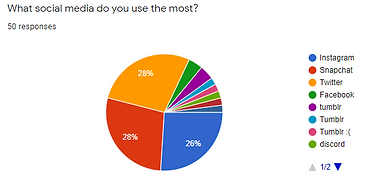


Production Meeting 3
Production Meeting 4
We couldn't record this meeting as we had technical difficulties. We decided to change the name of the radio show from "An evening with Eden and Jaxmine" to "The Student Lounge" for the reasons listed above. We also added a mini weather section and decided to look at inspiring stories to add for the news section, this was because I wanted the radio to feel like a drivetime radio and it'd also be a way to appeal to the older target audience. We then added a topic where we ask each other awkward "ice breaker" questions to lighten up the mood of the show
Bibliography
Absolute Radio. (Year unknown) Win huge cash prizes in time for Christmas every weekday on Make Me A Winner. Available at: https://planetradio.co.uk/absolute-radio/competitions/win/make-me-a-winner/. Accessed at: 12.01.22
Academic. (Year unknown) Station identification. Available at: https://en-academic.com/dic.nsf/enwiki/355292. Accessed at: 06.01.22
Adobe. (Year unknown) Audition tutorials | Learn how to use Adobe Audition. Available at: https://helpx.adobe.com/uk/audition/tutorials.html. Accessed at: 13.01.22
Angel Radio. (Year unknown) About Us. Available at: https://www.angelradioisleofwight.com/AboutUs. Accessed at: 05.01.22
Ashbrook, J. (2021) 7 Tips on How to Present Great Radio. Available at: https://radio.co/blog/7-tips-present-great-radio. Accessed at: 12.01.22
Barnfield. (2022) Live | GAP. Available at: https://www.gap.barnfield.ac.uk/enrichment-live. Accessed at: 12.01.22
Barron, Brenda. (2021) 10 Beginner Audio Editing Tutorials for Adobe Audition. Available at: https://speckyboy.com/beginner-audio-editing-tutorials-for-adobe-audition/. Accessed at: 13.01.22
Bauer Media. (Year unknown) Kiss - Brands - Bauer Media. Available at: https://www.bauermedia.co.uk/brands/kiss. Accessed at: 05.01.22
Bauer Media. (Year unknown) KISS Media Pack. Available at: https://www.bauermedia.co.uk/uploads/kiss.pdf. [Ebook] Accessed at: 05.01.22
BBC. (2016) BBC - BBC Radio 1 - BBC Trust. Available at: https://www.bbc.co.uk/bbctrust/our_work/services/radio/service_licences/bbc_radio_1.html. Accessed at: 06.01.22
BBC. (2016) BBC - BBC Radio 2 - BBC Trust. Available at: https://www.bbc.co.uk/bbctrust/our_work/services/radio/service_licences/bbc_radio_2.html. Accessed at: 05.01.22
BBC. (2016) BBC - BBC Radio 5 live - BBC Trust. Available at: https://www.bbc.co.uk/bbctrust/our_work/services/radio/service_licences/bbc_r5_live.html. Accessed at: 05.01.22
BBC. (2017) BBC Radio 2. Available at: http://downloads.bbc.co.uk/radio/commissioning/BBC_Radio_2_Sounds_of_the_80s.pdf. [Ebook] Accessed at: 05.01.22
BBC. (2017) BBC Radio 5Live. Available at: http://downloads.bbc.co.uk/radio/commissioning/Radio5Live-606.pdf. [Ebook] Accessed at: 05.01.22
BBC. (2022) BBC - About Radio 2. Available at: https://www.bbc.co.uk/programmes/articles/3MhDvs4L5c7Tw7FXkSmXYBY/about-radio-2. Accessed at: 05.01.22
BBC. (2022) BBC Radio 2 - Jeremy Vine. Available at: https://www.bbc.co.uk/programmes/b006wr3p. Accessed at: 05.01.22
BBC. (2022) BBC Radio 5 live - 5 Live Sport. Available at: https://www.bbc.co.uk/programmes/b0070hx6. Accessed at: 05.01.22
BBC. (2022) BBC Sounds - Music. Radio. Podcasts. Available at: https://www.bbc.co.uk/sounds. Accessed at: 05.01.22
BBC. (2022) Sara Cox - When Have You Turned Up At The Wrong Time Or On The Wrong Day?. Available at: https://www.bbc.co.uk/sounds/play/m00132lq. Accessed at: 06.01.22
BBC. (2022) Sports Report - 08/01/2022 - BBC Sounds. Available at: https://www.bbc.co.uk/sounds/play/m00138q6. Accessed at: 09.01.22
BBC. (Year unknown) BBC - About Radio 1. Available at: https://www.bbc.co.uk/programmes/articles/1qDmdH8V94XKTPB51Q6ZFPN/about-radio-1. Accessed at: 06.01.22
BBC. (Year unknown) What is DAB radio?. Available at: https://www.bbc.co.uk/reception/help-guides/dab/what-is-dab-radio. Accessed at: 05.01.22
Bhamji, M. (2021) Friends - A Guide to Friendship for Teenagers and Adults. [Ebook] Books for Life Publishing House. Accessed at: 13.01.22
Capital. (2019) The UK's Number 1 Hit Music Station - Capital. Available at: https://www.capitalfm.com/no1/. Accessed at: 05.01.22
Dee, J. (2012) What makes the perfect radio drivetime show?. Available at: https://www.theguardian.com/tv-and-radio/tvandradioblog/2012/apr/03/greg-james-bbc-radio-1-drivetime. Accessed at: 13.01.22
Duggins, A. (2020) Has Times Radio fulfilled its promise of a commercial Radio 4?. Available at: https://www.campaignlive.co.uk/article/times-radio-fulfilled-its-promise-commercial-radio-4/1723129. Accessed at: 05.01.22
Dunn, F. (2021) 12 new musicians making the UK sound awesome. Available at: https://i-d.vice.com/en_uk/article/m7ep7q/new-uk-music-2021. Accessed at: 13.01.22
Ehmke, R. (Year unknown) Teens and Romantic Relationships. Available at: https://childmind.org/article/how-to-help-kids-have-good-romantic-relationships/. Accessed at: 13.01.22
Eventbrite. (2022) RIMAP Postgraduate Research Student Conference. Available at: https://www.eventbrite.co.uk/e/rimap-postgraduate-research-student-conference-tickets-227033381957. Accessed at: 12.01.22
Eventbrite. (2022) University of Bedfordshire Campus Tour - Luton Campus. Available at: https://www.eventbrite.co.uk/e/university-of-bedfordshire-campus-tour-luton-campus-tickets-223929016717. Accessed at: 12.01.22
Giger, T. (2014) Radio Programming & Promotions For Drivetime & Evening Shows. Available at: https://radioiloveit.com/radio-programming-radio-formats/radio-programming-and-radio-promotions-for-drivetime-shows-and-evening-shows/. Accessed at: 13.01.22
Global. (Year unknown) Heart | Radio Advertising | 10m Weekly UK Listeners | Global. Available at: https://global.com/radio/heart/. Accessed at: 12.01.22
Gorkana. (Year unknown) Sport and talkSPORT. Available at: https://www.gorkana.com/events/media-briefings/gorkana-media-briefing-with-wireless/. Accessed at: 05.01.22
Heart. (Year unknown) About Us - Heart. Available at: https://www.heart.co.uk/about-us/. Accessed at: 05.01.22
Heart. (Year unknown) Heart UK Competitions - Win Money, Holidays & The Best Prizes!. Available at: https://www.heart.co.uk/digital/win/. Accessed at: 12.01.22
Heart reporter. (2022) January Jackpot 2022: Twenty people will win £22,000 this month!. Available at: https://www.heart.co.uk/win/january-jackpot-2022/. Accessed at: 12.01.22
HRB. (Year unknown) Hospital Radio Bedford. Available at: www.hospitalradiobedford.org.uk. Accessed at: 05.01.22
HRB. (Year unknown) Hospital Radio Bedford | Tuning In and Most Requested. Available at: www.hospitalradiobedford.org.uk/most-requested/. Accessed at: 05.01.22
KISS. (2022) KISS | The Beat Of The UK. Available at: https://planetradio.co.uk/kiss/. Accessed at: 05.01.22
L&D Radio. (Year unknown) L&D Radio. Available at: https://www.ldhr.co.uk. Accessed at: 05.01.22
L&D Radio. (Year unknown) Luton & Dunstable Hospital Radio - About Us. Available at: https://www.ldhr.co.uk/about. Accessed at: 05.01.22
media.info. (2021) BBC Radio 2 - listening figures. Available at: https://media.info/radio/stations/bbc-radio-2/listening-figures. Accessed at: 12.01.22
media.info. (Year unknown) Times Radio. Available at: https://media.info/radio/stations/times-radio. Accessed at: 05.01.22
Media Music Productions. (Year unknown) Radio Station Idents - Fully Produced - Tailored to your station. Available at: https://www.mediamusicproductionsuk.com/radio-station-idents/. Accessed at: 06.01.22
Media Performance. (2022) Advertise on talkSPORT. Available at: https://www.mediaperformance.co.uk/advertise-on-talksport-radio. Accessed at: 05.01.22
Mike Russell. (2018) Adobe Audition CC Tutorial for Beginners - Getting Started. Available at: https://www.youtube.com/watch?v=en3qUvJG42s. [Online Video.] Accessed at: 13.01.22
MoneySavingExpert. (2021) E: 23/07 Win £££ Make Me A Winner (1 Free entry online - starts 01/06). Available at: https://forums.moneysavingexpert.com/discussion/6271260/e-23-07-win-make-me-a-winner-1-free-entry-online-starts-01-06. Accessed at: 12.01.22
O'Conner, R. (2020) Ones to Watch 2021: The 15 musicians to look out for in the new year. Available at: https://www.independent.co.uk/arts-entertainment/music/features/ones-to-watch-2021-berwyn-french-the-kid-benee-b1778573.html. Accessed at: 13.01.22
Ofcom. (2010) KISS 100, KISS 101 and KISS 105. Available at: https://www.ofcom.org.uk/__data/assets/pdf_file/0017/33047/main.pdf. [Ebook] Accessed at: 05.01.22
Ofcom. (2020) The Ofcom Broadcasting Code (with the Cross-promotion Code and the On Demand Programme Service Rules). Available at: https://www.ofcom.org.uk/tv-radio-and-on-demand/broadcast-codes/broadcast-code. Accessed at: 05.01.22
Ofcom. (2021) Section one: Protecting the under-eighteens. Available at: https://www.ofcom.org.uk/tv-radio-and-on-demand/broadcast-codes/broadcast-code/section-one-protecting-under-eighteens. Accessed at: 05.01.22
Official Charts. (2022) Official Singles Chart Top 100. Available at: https://www.officialcharts.com/charts/. Accessed at: 13.01.22
Radiocentre. (Year Unknown) Commercial radio at a glance - Radiocentre. Available at: https://www.radiocentre.org/why-use-radio/commercial-radio-at-a-glance/. Accessed at: 05.01.22
radiojingles. (2017) KISS FM UK The Radio Imaging 2017. [Online Video.] Available at: https://www.youtube.com/watch?v=zYDe7LttDEA. Accessed at: 06.01.22
radiojingles. (2018) New Jingles for BBC Radio 2 Hot AC from Wisebuddah. [Online Video.] Available at: https://www.youtube.com/watch?v=J8b82gPFBBA. Accessed at: 06.01.22
radiojingles. (2018) Official BBC Radio 1 The Official Chart Show Opener. Available at: https://www.youtube.com/watch?v=F1PJeZXkbFE. Accessed at: 06.01.22
radiojingles. (2019) 2019 Breakfast Openers, Idents & Jingles for BBC Radio 2 from Wisebuddah. [Online Video.] Available at: https://www.youtube.com/watch?v=LqQGvA4Radk. Accessed at: 06.01.22
Radio LaB. (2022) Radio LaB 97.1FM. Available at: https://radiolab.beds.ac.uk. Accessed at: 05.01.22
RAJAR. (2021) All Radio Listening. Available at: https://www.rajar.co.uk/docs/news/RAJAR_DataRelease_InfographicQ32021.pdf. Accessed at: 05.01.22
RAJAR. (2021) RAJAR. Available at: https://www.rajar.co.uk/listening/quarterly_listening.php. Accessed at: 09.01.22
RAJAR. (2021) Rajar Data Release. Available at: https://www.rajar.co.uk/docs/2021_09/All%20Comparative%20Data%20Charts%20-%20Q3%202021%20-%20Clean.pdf. [Ebook] Accessed at: 12.01.22
RAJAR. (Year unknown) RAJAR. Available at: https://www.rajar.co.uk/content.php?page=about_organisation. [Ebook] Accessed at: 05.01.22
Rare FM. (2022) Rare FM. Available at: https://rarefm.co.uk. Accessed at: 05.01.22
Schofield, J. (2012) Recording phone calls for podcasts or broadcast. Available at: https://www.theguardian.com/technology/askjack/2012/feb/09/ask-jack-record-phone-calls. Accessed at: 13.01.22
talkSPORT. (2015) talkSPORT audience grows 8%. Available at: https://talksport.com/uncategorized/275099/talksport-audience-grows-8-150521147586/. Accessed at: 05.01.22
talkSPORT. (2018) About. Available at: https://talksport.com/about/. Accessed at: 05.01.22
The Pips. (Year unknown) Hints, tips & advice for radio presenters. Available at: www.thepips.co.uk/hints-tips/presenting-tips/. Accessed at: 12.01.22
University of Bedfordshire. (Year unknown) Luton campus | University of Bedfordshire. Available at: https://www.beds.ac.uk/about-us/campuses/luton/. Accessed at: 12.01.22